Best PLYOR Digital Pianos: 2 Models Compared
As an Amazon Associate we earn from qualifying purchases. Links on this page are affiliate links.
Finding the best PLYOR digital pianos requires checking the published specifications for each model. We compared 2 options to help you choose based on key actions, sizes, and connectivity. PLYOR offers full-size, 88-key instruments designed for beginners. The PLYOR 88-Key Semi-Weighted Digital Piano leads this list. It ranks first because it provides solid app connectivity and polyphony for new players. These picks are based strictly on the specs listed on the product pages.
Quick picks
| # | Product | Best for | Price |
|---|---|---|---|
| 1 | PLYOR 88-Key Semi-Weighted Digital Piano Best overall | beginners needing app connectivity | Check price of PLYOR 88-Key Semi-Weighted Digital Piano on Amazon |
| 2 | PLYOR P-810 88-Key Weighted Digital Piano Best budget | Beginners wanting a complete weighted keyboard setup | Check price of PLYOR P-810 88-Key Weighted Digital Piano on Amazon |
Our 2 picks

PLYOR 88-Key Semi-Weighted Digital Piano
Best for: beginners needing app connectivity
- Number of Keys
- 88
- Key Action
- Semi-weighted
- Preset Tones
- 800+
- Pedal Type
- Sustain pedal
- Connectivity
- Bluetooth, USB-MIDI
- Target Audience
- Beginners
View on Amazon: PLYOR 88-Key Semi-Weighted Digital Piano Affiliate link
The PLYOR P-105 is a full-size 88-key digital piano with semi-weighted keys. It offers 800+ tones and 128-note polyphony. Connectivity includes USB/MIDI and Bluetooth for app use. The package includes a stand and sustain pedal. This setup suits beginners and adults seeking a compact, expressive instrument for home practice or teaching.
Pros
- 88 full-size semi-weighted keys for authentic feel
- 128-note polyphony prevents note dropout
- Bluetooth and USB/MIDI connectivity
- Includes stand and sustain pedal
- Headphone jack for silent practice
Cons
- Semi-weighted action lacks hammer mechanisms
- No dedicated display for settings
- No built-in speakers listed
Good fit if
- You want a complete package with stand
- You need Bluetooth for learning apps
- You prefer a compact footprint
Skip if
- You require fully weighted hammer action
- You need a built-in display
- You want built-in speakers
Verdict: The PLYOR P-105 88-Key Semi-Weighted Digital Piano delivers solid connectivity and polyphony for beginners. It fits users who value a complete, space-saving setup with app integration.
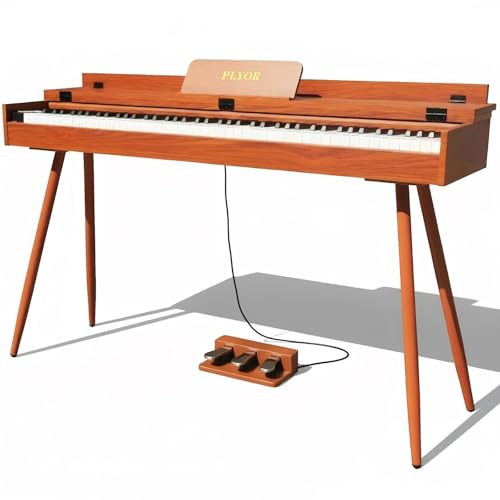
PLYOR P-810 88-Key Weighted Digital Piano
Best for: Beginners wanting a complete weighted keyboard setup
- Number of Keys
- 88
- Key Action
- Progressive hammer-action
- Pedal Type
- Triple pedal
- Connectivity
- USB-MIDI
- Target Audience
- Beginners
- Color
- Brown
View on Amazon: PLYOR P-810 88-Key Weighted Digital Piano Affiliate link
The PLYOR P-810 is a full-sized digital piano with 88 weighted keys and a brown finish. It includes a stand and three pedals for a complete setup. The keyboard features 128-note polyphony and USB/MIDI connectivity for computer integration. This model suits players who want an authentic touch and immediate recording capabilities without extra hardware.
Pros
- 88 weighted keys for authentic acoustic feel
- Includes stand and triple pedals
- 128-note polyphony for complex passages
- USB/MIDI connectivity for studio use
Cons
- Heavier build at 51 pounds
- Limited to weighted action only
- No Bluetooth audio mentioned
Good fit if
- You need a complete setup with stand and pedals
- You want weighted keys for technique building
- You plan to connect to a computer for MIDI
Skip if
- You prefer a lightweight portable keyboard
- You require Bluetooth wireless connectivity
- You need hammer-action keys instead of weighted
Verdict: PLYOR P-810 88-Key Weighted Digital Piano offers a sturdy, all-in-one package for beginners seeking weighted keys and MIDI connectivity. It fits players who want a permanent setup with pedals and a stand.
Specifications side by side
| Spec | PLYOR 88-Key Semi-Weighted Digital Piano | PLYOR P-810 88-Key Weighted Digital Piano |
|---|---|---|
| Number of Keys | 88 | 88 |
| Key Action | Semi-weighted | Progressive hammer-action |
| Preset Tones | 800+ | not stated |
| Pedal Type | Sustain pedal | Triple pedal |
| Connectivity | Bluetooth, USB-MIDI | USB-MIDI |
| Target Audience | Beginners | Beginners |
| Color | Brown | Brown |
| Dimensions | 14.8 × 51.4 × 27.8 inches | not stated |
| Weight | not stated | 51 pounds |
| Size | Full | Full |
| Model | P-105 | P-810 |
PLYOR Digital Piano Models Compared
The PLYOR lineup includes two distinct 88-key options for beginners. The P-105 features semi-weighted keys and measures 51.4 inches wide. It targets users who need app connectivity and a space-saving design. This model suits players who prioritize portability and digital integration over heavy resistance.
The P-810 offers fully weighted keys and includes a sturdy stand with pedals. Weighing 51 pounds, it provides a permanent setup for those who want a complete package. This model fits beginners seeking a traditional piano feel with MIDI connectivity. You can choose based on whether you prefer semi-weighted or fully weighted actions.
Who PLYOR Digital Pianos Suit
PLYOR targets beginners with two full-size, 88-key models. The P-105 offers semi-weighted keys and app connectivity for those needing a compact, portable setup. The P-810 provides fully weighted keys and a sturdy build for players wanting a permanent arrangement with pedals. Both are brown. This range lacks smaller 61-key options or portable travel cases. There are no color variations beyond brown. If you need weighted keys for serious practice, the P-810 fits. For app-based learning and space savings, the P-105 works. Neither model includes advanced features for advanced players.
Key Specs for Choosing PLYOR Pianos
-
Check Key Action Type
Start by deciding between semi-weighted and fully weighted keys. The P-105 uses semi-weighted keys, which offer lighter resistance. This action suits beginners who want a familiar feel without heavy effort. The P-810 features fully weighted keys. This provides a heavier, more authentic piano response. Choose semi-weighted for practice and portability. Select fully weighted for serious technique development. Your preference determines the resistance you feel while playing.
-
Confirm Number of Keys
Both models include 88 keys. This full range covers the entire standard piano keyboard. You need all 88 keys for classical repertoire and advanced pieces. Fewer keys limit your range. Since both options provide a complete set, you do not need to compromise on range. Ensure you have enough desk space for a full-size layout. The 88-key count is essential for proper musical education.
-
Evaluate Portability Needs
Consider how often you move the instrument. The P-105 measures 51.4 inches wide and 14.8 inches deep. Its compact footprint aids in small rooms. The P-810 weighs 51 pounds. This weight suggests a heavier, more permanent structure. If you plan to transport the piano frequently, the lighter or smaller model may suit you better. Check dimensions carefully to fit your available space.
-
Identify Target Audience
Both pianos target beginners. This focus means features prioritize ease of use over professional complexity. You benefit from straightforward controls and essential connectivity. Advanced players might find these models lacking in advanced features. Beginners gain access to essential tools like app connectivity and MIDI support. Confirm that your skill level matches this beginner-focused design for the best experience.
-
Assess Color and Style
Both models come in brown. This color choice affects how the piano fits your room decor. Brown offers a warm, traditional look. If you prefer black or white, these specific models may not match your aesthetic. Check the color before purchasing to ensure it complements your existing furniture. The visual style is a minor but visible detail in your home setup.
Frequently asked questions
Which PLYOR digital piano is best for beginners?
The P-105 is the top pick for beginners who need app connectivity. It features 88 semi-weighted keys and a compact design. The P-810 is also great for those wanting a complete weighted setup. Both models target beginners with full-size 88-key layouts.
What is the difference between semi-weighted and weighted keys?
Semi-weighted keys offer lighter resistance, making them easier to play without heavy effort. Fully weighted keys provide a stiffer feel closer to acoustic pianos. The P-105 uses semi-weighted action, while the P-810 features fully weighted keys for a more permanent setup.
Are PLYOR digital pianos portable?
Yes, both models are designed for portability. The P-105 measures 51.4 inches wide and 14.8 inches deep, fitting into smaller spaces. The P-810 weighs 51 pounds and includes a sturdy build. Both are full-size instruments that balance stability with transportability for beginners.
Do PLYOR pianos come with pedals?
The P-810 is described as a complete setup that includes pedals and a stand. This makes it suitable for players wanting a permanent arrangement. The P-105 focuses on app integration and connectivity, offering a space-saving design rather than a bundled stand package.
What colors are available for PLYOR digital pianos?
Both the P-105 and P-810 models are available in brown. This color option is consistent across the featured lineup. The brown finish complements the full-size 88-key design, providing a classic look for your home studio or practice space.
Can I connect PLYOR pianos to apps?
The P-105 is specifically noted for its app connectivity. This feature supports users who value digital integration for learning or recording. The P-810 offers MIDI connectivity for digital setups. These features allow you to connect the instruments to computers or mobile devices.
How many keys do PLYOR digital pianos have?
All models in this comparison feature 88 keys. This full-size layout is standard for digital pianos, providing a complete range for practice. Both the semi-weighted P-105 and the weighted P-810 include the full 88-key configuration for beginners and serious players.