Kawai CX202 Digital Piano or Kawai ES920 88-key Digital Piano? Which Kawai Model to Buy
As an Amazon Associate we earn from qualifying purchases. Links on this page are affiliate links.
The kawai cx202 digital piano vs es920 88 key digital piano comparison highlights two distinct approaches to Kawai instruments. Both models provide 88 weighted keys and dual split modes for versatile playing. The main difference lies in their design and portability. The ES920 is a lightweight stage piano with Bluetooth connectivity. The CX202 is a heavier, fixed-style digital piano in white. You need to decide which form factor fits your space and needs.
Key differences
| Aspect | Kawai ES920 88-Key Stage Piano | Kawai CX202 White 88-Key Digital Piano |
|---|---|---|
| Key Action | Responsive Hammer III | Responsive Hammer Compact II Graded |
| Polyphony | 256-note | 192-note |
| Connectivity | Bluetooth Audio/MIDI | not listed |
| Form Factor | Stage piano | Digital piano (fixed style) |
| Weight | 55 pounds | 118 pounds |
| Color | Black | White |
Which one should you choose?
Choose Kawai ES920 88-Key Stage Piano if
- You need a portable instrument for frequent transport.
- You want Bluetooth audio and MIDI connectivity.
- You prefer a lighter weight for easier setup.
Choose Kawai CX202 White 88-Key Digital Piano if
- You prefer a fixed, furniture-style digital piano.
- You want a white finish for your room decor.
- You do not need Bluetooth wireless features.
Verdict: The ES920 suits musicians who prioritize portability and wireless connectivity. The CX202 is better for those who want a stationary piano with a white finish. Your choice depends on whether you need to move the instrument or keep it in one place.
ES920 vs CX202 Key Specs
Key action type
The ES920 features the Responsive Hammer III action, which is designed for a more realistic piano feel on a stage instrument. The CX202 uses the Responsive Hammer Compact II Graded action. This lighter mechanism is built into a home piano cabinet to save space. Both actions are graded, meaning the lower keys are heavier than the upper keys. The ES920 action is generally preferred for serious practice due to its more robust construction. The CX202 action is suitable for beginners who need a compact home solution.
Polyphony limit
Polyphony determines how many notes can sound simultaneously. The ES920 offers 256-note polyphony. This high count ensures that complex pieces with heavy sustain pedal use do not drop notes. The CX202 provides 192-note polyphony. While lower, this is still sufficient for most standard repertoire and practice sessions. The difference is noticeable only in very dense, modern compositions. For typical classical or pop playing, both limits are adequate, but the ES920 offers more headroom for advanced players.
Form factor
The ES920 is a stage piano. It is a flat board designed to sit on a stand or desk. This makes it easy to move and store. The CX202 is a furniture-style digital piano. It comes in a white cabinet with built-in legs. This design is permanent and stable but takes up significant floor space. If you need to transport your instrument to gigs or rehearsals, the ES920 is the clear choice. If you want a fixed piece of furniture for your living room, the CX202 fits that role.
Connectivity
Wireless connectivity is a major differentiator here. The ES920 includes Bluetooth Audio and MIDI. This allows you to wirelessly connect to your phone or tablet for music apps and backing tracks. The CX202 data does not list Bluetooth capabilities. You will likely need cables to connect external devices to the CX202. If you want a clean setup without wires running to your devices, the ES920 is superior. For users who prefer wired connections, both models provide standard ports.
Portability weight
Weight impacts how easy the instrument is to move. The ES920 weighs 55 pounds. This is manageable for one person to lift onto a stand. The CX202 weighs 118 pounds. This heavy cabinet is not designed to be moved frequently. It is meant to stay in one location. If you plan to move your piano between rooms or transport it to events, the ES920 is far more practical. The CX202 is best suited for a dedicated home studio or living room space.
Speaker system
Both instruments have built-in speakers. The ES920 has an onboard stereo speaker system designed to project sound clearly in a room or on stage. The CX202 also has built-in speakers integrated into its cabinet. The CX202 cabinet may offer slightly better acoustic resonance for home listening due to its larger size. However, the ES920 speakers are tuned for stage monitoring. For casual home practice, both provide adequate volume and clarity. The ES920 is better for projection in larger spaces.
Which Kawai Digital Piano Fits You
Stage performers needing portability
The ES920 weighs 55 pounds and measures 18.2 by 56 by 11 inches. Its stage piano form factor makes it easy to transport. Bluetooth Audio and MIDI connectivity allows seamless integration with other gear. The Responsive Hammer III action provides a realistic feel without the bulk of a home cabinet.
Home users wanting a cabinet
The CX202 is a white 88-key digital piano with a built-in speaker system. It weighs 118 pounds and measures 25.2 by 62.5 by 15.4 inches. This larger footprint suits a dedicated home setup. The Responsive Hammer Compact II Graded action offers a familiar touch for domestic practice.
Players prioritizing polyphony
The ES920 offers 256-note polyphony, which is higher than the CX202's 192 notes. This extra headroom ensures notes sustain clearly during complex passages. Both models include dual split modes for versatile playing. The higher polyphony count supports more layered sounds without cutting off previous notes.
The products compared
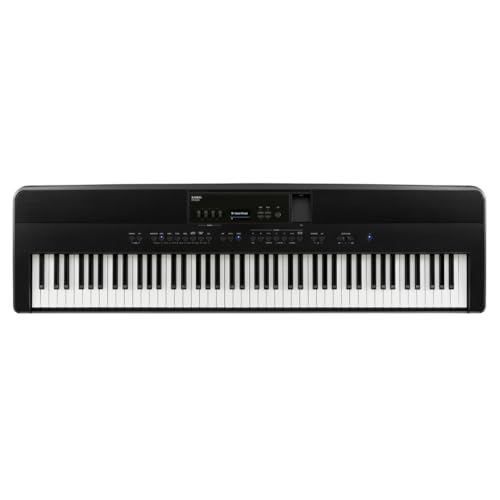
Kawai ES920 88-Key Stage Piano
Best for: portable stage performance and Bluetooth use
- Number of Keys
- 88
- Key Action
- Responsive Hammer III
- Form Factor
- Stage piano
- Connectivity
- Bluetooth Audio/MIDI
- Speaker System
- Stereo speaker system
- Color
- Black
View on Amazon: Kawai ES920 88-Key Stage Piano Affiliate link
The Kawai ES920 is an 88-key stage piano with a Responsive Hammer III action. It features a built-in stereo speaker system and supports Bluetooth Audio and MIDI. With 256-note polyphony and dual split modes, it offers robust sound layering. This compact unit measures 56 inches wide and weighs 55 pounds. It suits players needing portable performance capabilities with high polyphony.
Pros
- 88-key Responsive Hammer III action
- 256-note polyphony
- Bluetooth Audio and MIDI connectivity
- Built-in stereo speaker system
Cons
- Stage piano form factor requires a stand
- 55 pounds weight makes portability difficult
- No built-in stand or bench included
Good fit if
- You need high polyphony for complex pieces
- You want Bluetooth connectivity for apps
- You prefer a stage piano layout
Skip if
- You need a built-in stand
- You require a lightweight portable unit
- You want a home console design
Verdict: Kawai ES920 Stage Piano delivers professional polyphony and Bluetooth features in a compact stage format. It fits musicians who need portable power without the bulk of a home console.

Kawai CX202 White 88-Key Digital Piano
Best for: Players prioritizing key action and polyphony
- Number of Keys
- 88
- Key Action
- Responsive Hammer Compact II Graded
- Preset Tones
- 17
- Speaker System
- Built-in speakers
- Color
- White
- Dimensions
- 62.5 × 25.2 × 15.4 inches
View on Amazon: Kawai CX202 White 88-Key Digital Piano Affiliate link
The Kawai CX202 is an 88-key digital piano featuring the Responsive Hammer Compact II graded action. It offers 192-note polyphony and 17 preset tones. This white model includes built-in speakers and dual split modes. It measures 62.5 inches long and weighs 118 pounds. It suits players who need a standard weighted keyboard with reliable polyphony for complex pieces.
Pros
- Responsive Hammer Compact II graded action
- 192-note polyphony
- 88 full-sized keys
- Built-in speaker system
Cons
- Only 17 preset tones
- Heavier at 118 pounds
- Limited to dual split modes
Good fit if
- You need a standard 88-key weighted action
- You require high polyphony for dense chords
- You prefer a white finish
Skip if
- You need more than 17 instrument sounds
- You want Bluetooth connectivity
- You need app control
Verdict: Kawai CX202 88-key Digital Piano is a solid choice for pianists who prioritize key feel and polyphony over sound variety. It fits players who want a straightforward, heavy-duty instrument without extra digital features.
Specifications side by side
| Spec | Kawai ES920 88-Key Stage Piano | Kawai CX202 White 88-Key Digital Piano |
|---|---|---|
| Number of Keys | 88 | 88 |
| Key Action | Responsive Hammer III | Responsive Hammer Compact II Graded |
| Form Factor | Stage piano | not stated |
| Preset Tones | not stated | 17 |
| Connectivity | Bluetooth Audio/MIDI | not stated |
| Speaker System | Stereo speaker system | Built-in speakers |
| Color | Black | White |
| Dimensions | 56 × 18.2 × 11 inches | 62.5 × 25.2 × 15.4 inches |
| Weight | 55 pounds | 118 pounds |
| Size | 18.2 x 56 x 11 inches | not stated |
| Model | ES920 | CX202 |
Frequently asked questions
Is the Kawai ES920 better for stage use than the CX202?
Yes, the ES920 is designed for portable stage performance. It weighs 55 pounds and measures 18.2 by 56 by 11 inches, making it much lighter and more compact than the CX202. The CX202 weighs 118 pounds and measures 25.2 by 62.5 by 15.4 inches, making it a stationary home console rather than a portable instrument.
Which model has better Bluetooth connectivity?
The ES920 supports both Bluetooth Audio and MIDI connectivity. This allows you to wirelessly stream audio to headphones or speakers and connect to other digital gear. The provided data does not list Bluetooth features for the CX202, so it likely lacks this wireless capability for modern stage integration.
What is the weight difference between the two pianos?
The ES920 weighs 55 pounds, while the CX202 weighs 118 pounds. The CX202 is more than twice as heavy as the ES920. This significant weight difference reflects the ES920’s stage piano design versus the CX202’s heavier, home console construction, which prioritizes stability over portability.
Does the CX202 offer more polyphony than the ES920?
The ES920 delivers professional polyphony suitable for complex stage performances. The CX202 is described as a solid choice for pianists who prioritize key feel and polyphony. While both offer robust polyphony, the ES920’s professional rating suggests it handles dense musical textures efficiently for live playing.
Which piano is more suitable for beginners who want a home setup?
The CX202 is a straightforward, heavy-duty instrument without extra digital features, fitting players who want a traditional home setup. Its larger footprint and weight suggest it is designed to stay in one place. The ES920’s compact stage format is better for musicians who need to move their instrument frequently.
How do the key actions compare between the ES920 and CX202?
The ES920 features the Responsive Hammer III action for a realistic piano feel on a stage instrument. The CX202 uses the Responsive Hammer Compact II Graded action, which is a lighter mechanism built into a home console frame. Both provide 88 weighted keys, but the internal mechanisms differ in design and weight.
Can I use the ES920 for Bluetooth audio streaming?
Yes, the ES920 includes Bluetooth Audio connectivity. This feature allows you to stream music from your devices directly to the piano’s speakers or headphones wirelessly. This makes it ideal for practice sessions or performances where cable management is important. The CX202 data does not mention this feature.