Kawai ES920 88-Key Stage Piano or Kawai 88-Key Rosewood Digital Piano? Which Kawai Model to Buy
As an Amazon Associate we earn from qualifying purchases. Links on this page are affiliate links.
The kawai es920 88 key stage piano vs 88 key rosewood digital piano comparison helps you decide between two distinct Kawai models. Both instruments feature 88 weighted keys and dual split modes, offering versatile playing options. The primary difference lies in their form factor and target use. The ES920 is a portable stage piano with Bluetooth connectivity, while the CX202 is a furniture-style digital piano with a rosewood finish. You need to choose based on your space and performance needs.
Key differences
| Aspect | Kawai ES920 88-Key Stage Piano | Kawai 88-Key Rosewood Digital Piano |
|---|---|---|
| Key Action | Responsive Hammer III | Responsive Hammer Compact II Graded |
| Polyphony | 256-note | 192-note |
| Form Factor | Stage piano | Digital piano (furniture style) |
| Connectivity | Bluetooth Audio/MIDI | not listed |
| Preset Tones | not listed | 17 |
| Dimensions (W x D x H) | 18.2 x 56 x 11 inches | 25.2 x 62.5 x 15.4 inches |
Which one should you choose?
Choose Kawai ES920 88-Key Stage Piano if
- You need a portable instrument for stage performances or travel
- You want Bluetooth connectivity for audio and MIDI streaming
- You prefer a higher polyphony count for complex classical pieces
Choose Kawai 88-Key Rosewood Digital Piano if
- You want a permanent furniture-style setup with a rosewood finish
- You prefer a larger, more substantial footprint for home placement
- You are looking for a dedicated digital piano with built-in speakers
Verdict: Choose the ES920 if portability and modern connectivity are your priorities. Select the CX202 if you prefer a traditional furniture aesthetic for your home. Both models deliver Kawai's signature touch response.
ES920 vs CX202 Key Specs
Key action technology
The Kawai ES920 uses the Responsive Hammer III action, a more advanced mechanism designed for realistic key weight and response. This action typically offers a more nuanced touch, suitable for dynamic performance control. In contrast, the CX202 features the Responsive Hammer Compact II Graded action. While still providing graded weighting to mimic an acoustic piano, the Compact II is a simplified version optimized for space efficiency. For players prioritizing subtle touch sensitivity and professional-grade response, the ES920’s superior action mechanism offers a clear advantage in expressiveness.
Polyphony capacity
Polyphony determines how many notes can sound simultaneously before older notes cut off. The ES920 supports 256-note polyphony, which is significantly higher than the CX202’s 192-note limit. This extra capacity ensures that complex chords, sustained pedal usage, and dense layered sounds remain clear without dropping notes. The CX202’s 192 notes are sufficient for most standard repertoire, but the ES920 provides a larger safety margin for advanced playing techniques or heavy use of the sustain pedal in dense musical passages.
Connectivity options
Wireless capability is a major differentiator between these two models. The ES920 includes built-in Bluetooth Audio and MIDI, allowing you to stream audio from your device to the piano’s speakers or connect wirelessly to computers and apps. The CX202 data does not list Bluetooth features, implying it relies on traditional wired connections for audio output and digital communication. If you want a clutter-free setup or need to use companion apps without cables, the ES920’s wireless integration is the superior choice.
Form factor and size
The ES920 is a stage piano with a slim profile, measuring 56 inches wide, 18.2 inches deep, and 11 inches high, weighing 55 pounds. It is designed for portability and easy transport. The CX202 is a furniture-style digital piano in rosewood, measuring 62.5 inches wide, 25.2 inches deep, and 15.4 inches high. It lacks a listed weight but is clearly larger and heavier. The ES920 is better for gigging or small spaces, while the CX202 offers a permanent, furniture-like presence.
Preset tones
The CX202 comes with 17 built-in preset sounds, offering a variety of piano types and basic accompaniment tones. The ES920 data does not specify the exact number of preset tones, focusing instead on its stage-oriented features. While the ES920 likely includes essential piano sounds, the CX202 explicitly lists its variety for immediate use. For users who want a broader selection of sounds right out of the box without connecting external devices, the CX202’s listed 17 tones provide a defined starting point.
Choose the right Kawai piano
Stage pianists needing Bluetooth
The ES920 includes Bluetooth Audio and MIDI connectivity. This allows you to connect wirelessly to devices for practice or performance. It features 256-note polyphony and a Responsive Hammer III action. The 55-pound weight and stage format suit mobile musicians who need reliable wireless integration and advanced touch response.
Home players wanting furniture style
The CX202 offers a Rosewood finish for home decor. It uses the Responsive Hammer Compact II graded action. This model provides 17 preset tones and 192-note polyphony. Its larger dimensions create a traditional piano presence. It suits players who prefer a fixed, furniture-style instrument with built-in speakers.
Players prioritizing key responsiveness
The ES920 features the Responsive Hammer III action. This mechanism offers more nuanced touch control than the CX202's Compact II action. With 256-note polyphony, it handles complex passages better. The stage format allows flexible placement. This model is ideal for performers who require precise dynamic control and advanced key mechanics.
The products compared
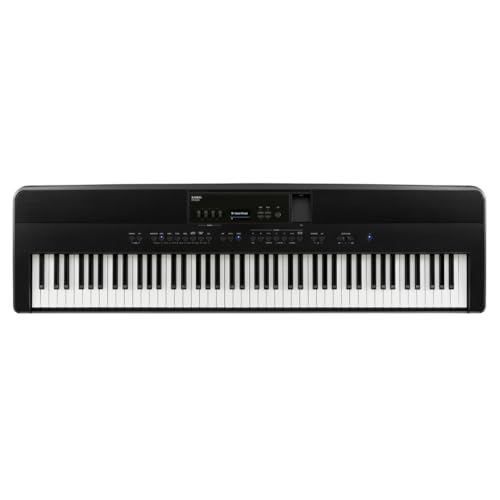
Kawai ES920 88-Key Stage Piano
Best for: portable stage performance and practice
- Number of Keys
- 88
- Key Action
- Responsive Hammer III
- Form Factor
- Stage piano
- Connectivity
- Bluetooth Audio/MIDI
- Speaker System
- Stereo speaker system
- Color
- Black
View on Amazon: Kawai ES920 88-Key Stage Piano Affiliate link
The Kawai ES920 is an 88-key stage piano with a black finish. It features the Responsive Hammer III key action and a built-in stereo speaker system. You get 256-note polyphony and Bluetooth Audio/MIDI connectivity. Dual split modes allow for layered sounds. This model suits players who need a portable instrument for live performance or practice.
Pros
- 88 weighted keys with Responsive Hammer III action
- Built-in stereo speaker system
- 256-note polyphony
- Bluetooth Audio and MIDI connectivity
- Dual split modes for sound layering
Cons
- Stage piano form factor lacks a built-in stand
- No rosewood finish option available
- Heavier at 55 pounds for portability
Good fit if
- You need a portable instrument for live gigs
- You want Bluetooth connectivity for apps
- You prefer a stage piano setup
Skip if
- You want a traditional home furniture look
- You need a built-in stand included
- You prefer a lighter instrument under 40 pounds
Verdict: Kawai ES920 88-Key Stage Piano. It fits musicians who need a lightweight, Bluetooth-enabled keyboard for stage use rather than a permanent home furniture piece.

Kawai 88-Key Rosewood Digital Piano
Best for: Home players seeking a wooden cabinet look
- Number of Keys
- 88
- Key Action
- Responsive Hammer Compact II Graded
- Preset Tones
- 17
- Speaker System
- Built-in speakers
- Color
- Rosewood
- Dimensions
- 62.5 × 25.2 × 15.4 inches
View on Amazon: Kawai 88-Key Rosewood Digital Piano Affiliate link
The Kawai CX202 is an 88-key digital piano finished in rosewood. It uses a Responsive Hammer Compact II graded action for touch response. You get 17 preset tones and 192-note polyphony. Dual split modes allow layering or splitting sounds. Its built-in speakers provide audio output. This model suits players who prefer a traditional wooden aesthetic over a modern stage design.
Pros
- 88 weighted keys with graded action
- 192-note polyphony capacity
- Rosewood finish for home decor
- Dual split sound modes
Cons
- Only 17 preset tones available
- Heavier and bulkier than stage pianos
- Limited to built-in speakers without headphone options listed
Good fit if
- You want a permanent home instrument
- You prefer a wooden cabinet look
- You need high polyphony for complex pieces
Skip if
- You need to transport the piano often
- You require many sound options
- You want a lightweight portable design
Verdict: Kawai CX202 Rosewood 88-Key Digital Piano is a solid choice for stationary home use where aesthetics matter. It fits players who value key feel and polyphony over portability and sound variety.
Specifications side by side
| Spec | Kawai ES920 88-Key Stage Piano | Kawai 88-Key Rosewood Digital Piano |
|---|---|---|
| Number of Keys | 88 | 88 |
| Key Action | Responsive Hammer III | Responsive Hammer Compact II Graded |
| Form Factor | Stage piano | not stated |
| Preset Tones | not stated | 17 |
| Connectivity | Bluetooth Audio/MIDI | not stated |
| Speaker System | Stereo speaker system | Built-in speakers |
| Color | Black | Rosewood |
| Dimensions | 56 × 18.2 × 11 inches | 62.5 × 25.2 × 15.4 inches |
| Weight | 55 pounds | not stated |
| Size | 18.2 x 56 x 11 inches | not stated |
| Model | ES920 | Cx202 |
Frequently asked questions
Is the Kawai ES920 suitable for live stage performances?
Yes. The ES920 is designed for portable stage use. It weighs 55 pounds and includes Bluetooth Audio and MIDI connectivity. These features allow wireless connection to devices for practice or performance. Its lightweight design makes it easier to transport than heavier furniture pianos.
Does the Kawai CX202 have a wooden cabinet?
Yes. The CX202 features a Rosewood finish and a cabinet design. It measures 62.5 inches in length and 15.4 inches in height. This model is intended for stationary home use where aesthetics matter. It does not prioritize portability like stage pianos.
How do the dimensions of the ES920 compare to the CX202?
The ES920 is more compact. It measures 56 inches in length, 18.2 inches in width, and 11 inches in height. The CX202 is larger, measuring 62.5 inches in length, 25.2 inches in width, and 15.4 inches in height. The ES920 is also lighter at 55 pounds.
Which Kawai model is better for beginners?
The ES920 fits beginners who need portability. It includes Bluetooth connectivity for connecting to learning apps. The CX202 is better for players who want a permanent furniture piece. It offers a wooden cabinet look. Both models have 88 keys for standard practice.
Can I connect the ES920 to my phone wirelessly?
Yes. The ES920 includes Bluetooth Audio and MIDI. You can connect it wirelessly to devices for practice or performance. This feature is not mentioned for the CX202. The CX202 is designed for stationary home use rather than wireless connectivity.
Is the CX202 heavy to move?
Yes. The CX202 is designed for stationary home use. It measures 62.5 inches in length and 25.2 inches in width. It lacks the lightweight design of the ES920, which weighs 55 pounds. The CX202 is not intended for frequent transport.
What is the main difference between the two models?
The main difference is form factor. The ES920 is a lightweight stage piano with Bluetooth. It weighs 55 pounds and measures 56 inches long. The CX202 is a furniture-style digital piano with a Rosewood finish. It is larger and intended for permanent home placement.