7 Best Electronic Keyboards Under $1000, Compared
As an Amazon Associate we earn from qualifying purchases. Links on this page are affiliate links.
Choosing the best electronic keyboards under $1000 requires looking at specific technical details rather than marketing claims. We compared 7 models based strictly on the specifications published on their listings. The Yamaha MX61 Blue 61-Key Synthesizer leads this list because its 15.4-pound weight makes it easy to transport for studio production and live performance. This guide helps you decide which instrument fits your setup by comparing key counts, dimensions, and weight.
Quick picks
The best fit for you
- You need a lightweight synth for studio production Yamaha MX61 Blue 61-Key Synthesizer The Yamaha MX61 weighs 15.4 pounds and offers straightforward USB integration for digital audio workstations.
- You want the most compact model on the list Korg Kross 2 61-Key Synthesizer Workstation The Korg Kross 2 is the lightest option at 8.38 pounds and fits in a small package.
- You need built-in speakers for live performance Yamaha CK Series 61-Key Stage Keyboard The Yamaha CK61 includes built-in speakers, making it practical for live sets without external amplification.
- You want a compact 88-key keyboard with tactile control Studiologic Numa Compact X SE 88-Key Keyboard The Studiologic Numa Compact X SE provides a semi-weighted 88-key layout with extensive control options.
Our 7 picks

Yamaha MX61 Blue 61-Key Synthesizer
Best for: studio production and live performance
- Number of Keys
- 61
- Sound Engine
- Motif Sound Engine
- Connectivity
- USB Audio/MIDI
- Color
- Blue
- Dimensions
- 44.7 × 15.3 × 8.2 inches
- Weight
- 15.4 pounds
View on Amazon: Yamaha MX61 Blue 61-Key Synthesizer Affiliate link
The Yamaha MX61 is a 61-key music production synthesizer designed for studio and live performance. It features a Motif sound engine with 128 notes of polyphony, ensuring smooth playback of complex layers and zones. Class-compliant USB connectivity allows for driver-free plug-and-play operation with computers. Weighing 15.4 pounds, it offers a balance of portability and robust feature sets for producers seeking reliable sound generation without external hardware dependencies.
Pros
- 128 notes of polyphony for dropout-free performance
- Class-compliant USB audio and MIDI connectivity
- Motif sound engine supports layering and zoning
- Virtual Circuit Modeling for vintage effect recreation
Cons
- 61-key size limits range compared to 88-key pianos
- No built-in speakers for standalone use
- Limited to 16-track MIDI sequencing
Good fit if
- You need a compact controller for studio production
- You require high polyphony for complex layers
- You want driver-free USB connectivity
Skip if
- You need a full 88-key piano action
- You require built-in speakers for practice
- You prefer a dedicated hardware sequencer
Verdict: The Yamaha MX61 Music Production Synthesizer fits producers who need a lightweight, polyphonic sound source with straightforward USB integration for their digital audio workstation setup.

Yamaha CK Series 61-Key Stage Keyboard
Best for: Live performers needing portable, speaker-equipped keyboards
- Number of Keys
- 61
- Color
- Black
- Special Features
- Built-In Speakers
- Dimensions
- 35.8 × 11.4 × 4.3 inches
- Weight
- 12.3 pounds
View on Amazon: Yamaha CK Series 61-Key Stage Keyboard Affiliate link
The Yamaha CK61 is a 61-key stage keyboard designed for live performance and studio work. It features built-in speakers, allowing for immediate use without external amplification. The instrument offers focused piano, organ, string, and synth sounds. Its compact dimensions and 12.3-pound weight make it portable. You will appreciate the two split points for playing three different sounds simultaneously across the keyboard.
Pros
- Built-in speakers for standalone use
- Two split points for three-sound playback
- Dedicated organ and synth sound sets
- Lightweight 12.3-pound portable design
Cons
- Only 61 keys limit range for piano repertoire
- No mention of Bluetooth connectivity
- No mention of a display screen
Good fit if
- You need a portable keyboard with built-in speakers
- You perform live and require split-point flexibility
- You prioritize organ and synth sounds over piano
Skip if
- You require a full 88-key weighted action
- You need extensive sound editing via an app
- You want a semi-modular analog synthesizer
Verdict: Yamaha CK61 61-Key Stage Keyboard is a practical option for musicians who need a lightweight, speaker-equipped keyboard for live sets. It suits players who value split-point flexibility and specific instrument sounds over full piano key counts.

Roland JUNO-D 61-Key Synthesizer
Best for: Portable stage performance and studio sequencing
- Number of Keys
- 61
- Key Action
- Synth-action
- Sound Engine
- ZEN-Core
- Preset Sounds
- Over 3800
- Connectivity
- USB-C audio/MIDI
- Power Source
- USB-C mobile battery
View on Amazon: Roland JUNO-D 61-Key Synthesizer Affiliate link
The Roland JUNO-D6 is a 61-key stage keyboard built for live performance and studio work. It uses the ZEN-Core engine to deliver over 3800 presets, including pianos, organs, and synths. The unit features a compact design weighing 12.8 pounds and supports USB-C battery power. You will appreciate the built-in eight-track sequencer and sample import function for creating custom sounds on the go.
Pros
- Over 3800 preset sounds from the ZEN-Core engine
- USB-C mobile battery power support
- Built-in eight-track sequencer
- Sample import function for user WAV files
- Compact 61-key synth-action design
Cons
- Synth-action keys are not weighted
- Limited to 61 keys for larger ranges
- No built-in speakers mentioned in data
Good fit if
- You need a lightweight keyboard for gigging
- You want extensive preset sounds without expansion
- You require USB-C battery power for portability
Skip if
- You require weighted hammer-action keys
- You need a full 88-key piano range
- You prioritize built-in speakers for home use
Verdict: The Roland JUNO-D6 61-Key Synth fits musicians who need a portable, sound-rich instrument for live sets. It suits those who value the ZEN-Core engine and battery power over heavy key action.

Korg Kross 2 61-Key Synthesizer Workstation
Best for: Portable synth workstations with recording
- Number of Keys
- 61
- Key Action
- Synth-action
- Sound Engine
- EDS-i
- Connectivity
- Mic/line inputs
- Dimensions
- 10.6 × 3.46 × 36.8 inches
- Weight
- 8.38 pounds
View on Amazon: Korg Kross 2 61-Key Synthesizer Workstation Affiliate link
The Korg Kross 2 is a 61-key synthesizer workstation built around the EDS-i sound engine. It features a synth-action keybed and includes both step and MIDI sequencers for composition. The unit also has an audio recorder and mic/line inputs. Weighing 8.38 pounds, it is a compact tool for creating music on the go. It suits players who need built-in sequencing and recording without a computer.
Pros
- EDS-i sound engine for versatile tones
- Built-in step and MIDI sequencers
- Audio recorder for capturing performances
- Mic and line inputs for external sources
Cons
- 61-key synth-action keybed lacks weighted feel
- No built-in speakers listed in specifications
- Limited to 61 keys for larger ranges
Good fit if
- You need a portable workstation for live performance
- You want to record audio directly to the device
- You prefer synth-action keys for lead lines
Skip if
- You require a full 88-key piano layout
- You need weighted hammer-action keys
- You want built-in speakers for immediate use
Verdict: Korg Kross 2 61-Key Synth Workstation is a compact workstation for producers who need sequencing and recording in a small package. It fits players who prioritize portability and synth-action keys over piano-style weight.

Moog Grandmother 32-Key Analog Synthesizer
Best for: monophonic analog sound design and Eurorack integration
- Number of Keys
- 32
- Key Action
- Velocity-sensitive
- Connectivity
- 1/4" in/out, 5-pin DIN MIDI, USB MIDI
- Color
- Black
- Special Features
- Sequencer
- Dimensions
- 14.3 × 23 × 5.51 inches
View on Amazon: Moog Grandmother 32-Key Analog Synthesizer Affiliate link
The MOOG Grandmother is a semi-modular analog synthesizer featuring 32 full-size velocity-sensing keys and monophonic sound generation. It includes 41 patch points, two analog oscillators, and a hardware spring reverb tank. This keyboard suits you if you want analog sound synthesis, modular patching, and hardware sequencing rather than polyphonic acoustic keyboard reproduction.
Pros
- 41 modular patch points for analog interconnectivity
- Built-in analog spring reverb tank that processes external audio
- 256-note sequencer with three sequence files
- Full-size velocity-sensing 32-key keybed
Cons
- Offers 32 keys compared to 61-key keyboards on this list
- Monophonic architecture limits output to one note at a time
- Lacks built-in speakers
Good fit if
- You prioritize modular routing and analog synthesis.
- You need hardware sequencing and real spring reverb.
- You integrate your keyboard with Eurorack hardware.
Skip if
- You need polyphony to play chords or two-handed piano parts.
- You require 61 or more keys.
- You want built-in speakers for untethered practice.
Verdict: MOOG 32-Key Semi-Modular Analog Synthesizer provides dedicated monophonic analog sound design and patchable modular routing for electronic musicians who do not require polyphony or a full keybed.
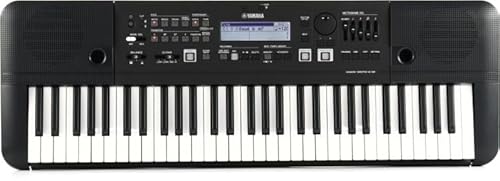
Yamaha 61-Key Instructional Keyboard
Best for: beginners seeking app-controlled learning tools
- Number of Keys
- 61
- Sound Engine
- FM AWM Tone Generators
- Color
- Black
- Dimensions
- 40.7 × 14.8 × 6 inches
- Weight
- 13.3 pounds
View on Amazon: Yamaha 61-Key Instructional Keyboard Affiliate link
The Yamaha HD-300 is a 61-key instructional keyboard designed for learning. It uses FM AWM tone generators for sound and includes rhythm styles. The unit features a built-in LCD display and a recording function with sound back and time shift capabilities. It connects to an iOS companion app for remote control. At 13.3 pounds, it is a lightweight option for students.
Pros
- 61-key layout with FM AWM tone generators
- iOS companion app with remote control
- Built-in LCD display for settings
- Recording function with time shift
Cons
- 61 keys limit range compared to 88-key pianos
- No built-in speakers listed in specifications
- iOS app support only, no Android mention
Good fit if
- You are a beginner looking for instructional features
- You prefer a lightweight keyboard for portability
- You use an iOS device for control
Skip if
- You need a full 88-key hammer action
- You require built-in speakers for immediate play
- You use Android devices exclusively
Verdict: Yamaha HD-300 61-Key Instructional Keyboard suits beginners who want guided learning tools and app connectivity. It is not ideal for performers needing extensive key range or self-contained audio output.

Studiologic Numa Compact X SE 88-Key Keyboard
Best for: compact stage performance with tactile control
- Number of Keys
- 88
- Key Action
- Semi-weighted with aftertouch
- Sound Engine
- Multi-sampling TrS (True Sound)
- Preset Sounds
- 148
- Built-In Speakers
- 2x10W + rear elliptical speakers
- Power Source
- DC 12V/2.5A power adapter
View on Amazon: Studiologic Numa Compact X SE 88-Key Keyboard Affiliate link
The Studiologic NUMA Compact X SE is an 88-key digital piano with a semi-weighted action and aftertouch. It features 148 preset sounds, a 200-voice polyphony, and a 2x10W built-in speaker system. The unit includes 29 programmable sliders and an OLED display for direct control. This keyboard suits players seeking a compact stage instrument with tactile feedback and extensive sound customization options.
Pros
- 88 keys with semi-weighted action and aftertouch
- 2x10W built-in amplifier and rear elliptical speakers
- 148 preset sounds and 200 polyphony
- 29 programmable sliders for control
- 128x64 OLED display for user interface
Cons
- Semi-weighted action lacks full hammer resistance
- Requires external DC power adapter
- Limited to 148 preset sounds
Good fit if
- You need 88 keys in a portable form factor
- You value tactile control via sliders
- You want built-in speakers for practice
Skip if
- You require a fully weighted hammer action
- You need wireless connectivity
- You prefer a large LCD screen
Verdict: Studiologic NUMA Compact X SE 88-Key offers a semi-weighted 88-key layout with extensive control options. It fits musicians who prioritize portability and tactile feedback over traditional hammer action.
Specifications side by side
| Spec | Yamaha MX61 Blue 61-Key Synthesizer | Yamaha CK Series 61-Key Stage Keyboard | Roland JUNO-D 61-Key Synthesizer | Korg Kross 2 61-Key Synthesizer Workstation | Moog Grandmother 32-Key Analog Synthesizer | Yamaha 61-Key Instructional Keyboard | Studiologic Numa Compact X SE 88-Key Keyboard |
|---|---|---|---|---|---|---|---|
| Number of Keys | 61 | 61 | 61 | 61 | 32 | 61 | 88 |
| Key Action | not specified | not specified | Synth-action | Synth-action | Velocity-sensitive | not specified | Semi-weighted with aftertouch |
| Sound Engine | Motif Sound Engine | not specified | ZEN-Core | EDS-i | not specified | FM AWM Tone Generators | Multi-sampling TrS (True Sound) |
| Preset Sounds | not specified | not specified | Over 3800 | not specified | not specified | not specified | 148 |
| Built-In Speakers | not specified | not specified | not specified | not specified | not specified | not specified | 2x10W + rear elliptical speakers |
| Connectivity | USB Audio/MIDI | not specified | USB-C audio/MIDI | Mic/line inputs | 1/4" in/out, 5-pin DIN MIDI, USB MIDI | not specified | not specified |
| Power Source | not specified | not specified | USB-C mobile battery | not specified | not specified | not specified | DC 12V/2.5A power adapter |
| Included Accessories | not specified | not specified | not specified | not specified | not specified | not specified | DC 12V/2.5A power adapter |
| Color | Blue | Black | Black | black with silver accents | Black | Black | Black |
| Special Features | not specified | Built-In Speakers | not specified | not specified | Sequencer | not specified | not specified |
| Dimensions | 44.7 × 15.3 × 8.2 inches | 35.8 × 11.4 × 4.3 inches | 39.6 × 12.8 × 3.7 inches | 10.6 × 3.46 × 36.8 inches | 14.3 × 23 × 5.51 inches | 40.7 × 14.8 × 6 inches | 54.8 × 12.5 × 6.5 inches |
| Weight | 15.4 pounds | 12.3 pounds | 12.8 pounds | 8.38 pounds | 16 pounds | 13.3 pounds | 15.7 pounds |
| Size | 61-Key | 61-Key | 39.57 x 12.76 x 3.7 inches | not specified | not specified | 40.7 x 14.8 x 6 inches | 1270 x 230 x 100 mm |
| Model | MX61BU | CK61 | JUNO-D6 | KROSS261MB | MOD-GRAND | HD 300 | 8034141640728 |
If you also need percussion, review specifications for the best electronic drum sets under 1000 to match your setup.
Key Specs to Compare
-
Check Key Count
Most models in this guide have 61 keys, which balances portability with enough range for most musical styles. If you need a full piano range, look at the 88-key Studiologic NUMA Compact X SE. The Moog Grandmother offers only 32 keys, designed specifically for modular sound design rather than traditional playing. Choose 61 keys for general use, 88 keys for pianists, or 32 keys for specialized synth work.
-
Assess Weight
Portability depends heavily on weight. The Korg Kross 2 is the lightest at 8.38 pounds, making it easy to carry for gigging musicians. Heavier options like the Moog Grandmother weigh 16 pounds, indicating more internal components and stability. The Yamaha MX61 weighs 15.4 pounds, offering a middle ground. Consider how often you transport the instrument when evaluating these figures.
-
Review Dimensions
Physical size matters for stage setups and home studios. The Yamaha CK61 is notably compact, measuring 35.8 inches in length and weighing just 12.3 pounds. The Studiologic NUMA Compact X SE is longer at 54.8 inches due to its 88-key layout. The Moog Grandmother is shorter at 14.3 inches long but deeper. Measure your space before purchasing to ensure the unit fits your desk or stand.
-
Consider Built-In Speakers
Some keyboards include built-in speakers, which simplifies live performance. The Yamaha CK Series is highlighted for this feature, allowing you to play without external amplification. Other models, like the Yamaha MX61 and Roland JUNO-D, are primarily designed for studio integration or external PA systems. If you perform solo without a sound engineer, prioritize models with integrated audio output capabilities.
-
Match Key Action
Key action affects playability. The Studiologic NUMA Compact X SE features semi-weighted keys, offering tactile feedback closer to acoustic pianos. The Korg Kross 2 uses synth-action keys, which are lighter and faster for rapid playing. The Yamaha instructional keyboard targets beginners with standard action. Choose weighted keys for piano practice and synth-action for electronic music production.
Frequently asked questions
Which electronic keyboard is the lightest for easy transport?
The Korg Kross 2 61-Key Synthesizer Workstation is the lightest option on this list. It weighs only 8.38 pounds. This makes it ideal for musicians who need a highly portable instrument for touring or small studio spaces. Its compact design prioritizes mobility without sacrificing essential sequencing features.
Do any of these keyboards have built-in speakers?
Yes, the Yamaha CK Series 61-Key Stage Keyboard includes built-in speakers. This feature allows you to play without connecting to an external amplifier or PA system. It is particularly useful for live performers who need a self-contained sound source during rehearsals or small gigs.
Is there a model with 88 keys under $1000?
The Studiologic Numa Compact X SE 88-Key Keyboard is the only model with a full 88-key layout. It features semi-weighted keys to provide tactile feedback closer to an acoustic piano. This option suits players who require a standard piano key range in a portable format.
Which synthesizer is best for analog sound design?
The Moog Grandmother 32-Key Analog Synthesizer is designed for dedicated monophonic analog sound design. It offers patchable modular routing for electronic musicians. This model is not polyphonic, so it is best for those focusing on bass lines, leads, and Eurorack integration rather than chordal accompaniment.
What is the smallest keyboard dimension available?
The Korg Kross 2 has the most compact dimensions at 10.6 inches in length and 3.46 inches in width. Its small footprint makes it easy to fit into tight studio setups or gig bags. This compact size supports its role as a lightweight, portable synth workstation.
Can I use these keyboards with a computer?
The Yamaha MX61 Blue 61-Key Synthesizer offers straightforward USB integration for digital audio workstations. This allows you to connect it directly to your computer for music production. Other models may also support connectivity, but the MX61 is specifically noted for its studio integration capabilities.
Which keyboard is best for beginners seeking learning tools?
The Yamaha 61-Key Instructional Keyboard is suited for beginners who want guided learning tools. It features app connectivity to support your practice routine. This model is not ideal for performers needing extensive key range or self-contained audio output, making it a focused choice for students.