KORG 61-Key Arranger Keyboard vs KORG microPiano 61-Key Miniature Grand (2026): Key Differences
As an Amazon Associate we earn from qualifying purchases. Links on this page are affiliate links.
This guide compares the korg 61 key arranger keyboard vs micropiano 61 key miniature grand. Both instruments feature 61 keys and focus on piano performance. The main difference lies in their design and sound library. The EK-50 is a full-sized arranger with extensive presets and recording tools. The microPiano is a compact, miniature grand with a smaller keybed. You need to decide which form factor fits your space and musical needs.
Key differences
| Aspect | Korg 61-Key Arranger Keyboard | Korg microPiano 61-Key Miniature Grand |
|---|---|---|
| Form Factor | Arranger Keyboard | Miniature Grand Piano |
| Number of Preset Tones | 702 | 61 |
| Key Action | Standard 61-key layout | Natural Touch mini keyboard |
| Dimensions | 39.1 x 15.4 x 5.2 inches | 34.5 x 8.5 x 16 inches |
| Weight | 16.5 pounds | 11.5 pounds |
| Built-in Speakers | 2 x 10W stereo speakers | Not listed |
Which one should you choose?
Choose Korg 61-Key Arranger Keyboard if
- You need a wide variety of sounds and styles for composition.
- You want built-in recording and sequencer features.
- You prefer a traditional flat keyboard layout.
Choose Korg microPiano 61-Key Miniature Grand if
- You have limited space and need a compact instrument.
- You want the aesthetic of a miniature grand piano.
- You are looking for a lighter, portable option.
Verdict: The EK-50 suits musicians who need an arranger with extensive sounds and recording capabilities. The microPiano is better for those who prioritize a compact footprint and grand piano aesthetics. Choose based on whether you need functional depth or space efficiency.
Korg Arranger vs MicroPiano Specs
Form Factor Design
The Korg EK-50 is a standard arranger keyboard with a flat, functional layout designed for studio or stage use. It measures 39.1 inches in length and weighs 16.5 pounds. In contrast, the Korg microPiano mimics a miniature grand piano, complete with an opening lid. It is more compact at 34.5 inches long and lighter at 11.5 pounds. The microPiano’s aesthetic focuses on visual appeal and space-saving design, while the EK-50 prioritizes a traditional workstation footprint for practical workflow.
Sound Library Size
Sound variety is a major differentiator between these two instruments. The EK-50 offers a vast library of 702 realistic preset tones, including pianos, guitars, brass, saxophones, and drums. It also includes 280 auto-accompaniment styles. The microPiano provides a much smaller selection of 61 sounds, focusing on organs, electric pianos, accordions, and other essentials. If you need diverse instrumentation for composition or performance, the EK-50 provides significantly more options than the microPiano’s curated list.
Key Action Type
The playing feel differs based on the internal mechanism. The microPiano features a Natural Touch mini keyboard, which is designed to be compact and responsive, offering an excellent playing feel for both beginners and serious performers. The EK-50 is an arranger keyboard, but its specific key action technology is not detailed in the provided specifications. Generally, arranger keyboards use standard weighted or semi-weighted actions. Without specific data on the EK-50’s action, we cannot determine which feels more natural to you.
Built-in Speakers
Audio output capability varies significantly. The EK-50 includes powerful built-in stereo speakers rated at 2 x 10W. These speakers can reproduce the instrument’s sound and also output audio from external devices connected via the input jack. The microPiano’s specifications do not mention built-in speakers. You would likely need to connect the microPiano to an external amplifier or headphones to hear it. For immediate, self-contained playback without extra gear, the EK-50 is the superior choice.
Recording Capabilities
For capturing musical ideas, the EK-50 includes a sequencer that functions as a linear 12-track recorder. It also features one-touch recording for quick idea capture. This allows you to compose, record, and share your creations directly on the instrument. The microPiano’s data does not list any recording features, sequencers, or MIDI connectivity options for saving performances. If you want to build multi-layered compositions or save your playing, the EK-50 provides essential tools that the microPiano lacks.
Which Korg 61-Key Model Fits You
You need a versatile arranger with many sounds
The EK-50 offers 702 preset tones and 280 styles. It includes a 12-track sequencer for recording. Built-in 2x10W stereo speakers provide immediate sound without extra gear. The clear display and illuminated buttons simplify navigation. You can split the keyboard to play different sounds at once, making it ideal for composing and live performance setup.
You want a compact piano with a grand look
The microPiano features a miniature grand design with an opening lid. It weighs only 11.5 pounds and measures 34.5 inches long, making it highly portable. The Natural Touch mini keyboard offers a responsive feel. It includes 61 authentic stereo-sampled grand piano sounds. This model suits players who prioritize aesthetic appeal and space-saving dimensions in their setup.
You need a lightweight instrument for travel
Weighing 11.5 pounds, the microPiano is significantly lighter than the EK-50 at 16.5 pounds. Its compact footprint allows easy transport and storage. The robust build ensures durability despite the smaller size. If your priority is moving the instrument frequently or fitting it into small spaces, this miniature grand provides the necessary portability without sacrificing the classic piano appearance.
The products compared

Korg 61-Key Arranger Keyboard
Best for: Arrangers needing 702 tones and 12-track recording
- Number of Keys
- 61
- Preset Tones
- 702
- Speaker System
- 2 x 10W stereo speakers
- Color
- Black
- Dimensions
- 39.1 × 15.4 × 5.2 inches
- Weight
- 16.5 pounds
View on Amazon: Korg 61-Key Arranger Keyboard Affiliate link
The Korg EK-50 is a 61-key arranger keyboard designed for composition and live performance. It features 702 preset tones and 280 styles, allowing you to layer sounds or use the split function. A bright display and LED-lit buttons simplify navigation. Built-in 20W stereo speakers provide ample volume. With a 12-track sequencer and one-touch recording, it captures your ideas quickly. It suits musicians needing versatile accompaniment tools.
Pros
- 702 realistic preset tones including pianos, guitars, and brass
- 280 built-in styles for instant accompaniment
- Bright display with large characters and LED-lit buttons
- Built-in 2 x 10W stereo speakers
- 12-track linear sequencer for recording
Cons
- 61-key range limits low and high note access
- Non-weighted keys may feel less realistic for piano technique
- No Bluetooth connectivity listed for wireless audio
Good fit if
- You need a portable keyboard with extensive accompaniment styles
- You want to record multi-track compositions on the device
- You prefer physical buttons and a clear display for quick navigation
Skip if
- You require weighted keys for traditional piano feel
- You need a full 88-key range for classical repertoire
- You rely on wireless Bluetooth audio connections
Verdict: Korg EK-50 61-Key Arranger Keyboard is a practical tool for musicians who need a wide variety of sounds and recording capabilities in a compact format. It fits those who prioritize style accompaniment and easy navigation over weighted key resistance.
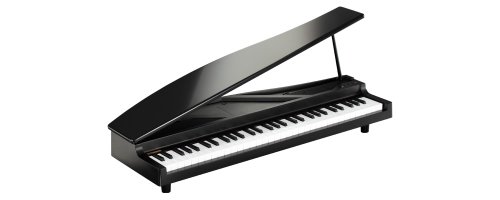
Korg microPiano 61-Key Miniature Grand
Best for: compact spaces and aesthetic appeal
- Number of Keys
- 61
- Key Action
- Natural Touch mini keyboard
- Form Factor
- Miniature Grand Piano
- Preset Tones
- 61
- Dimensions
- 34.5 × 8.5 × 16 inches
- Weight
- 11.5 pounds
View on Amazon: Korg microPiano 61-Key Miniature Grand Affiliate link
The Korg microPiano 61 features a miniature grand piano design with an opening lid. It includes a 61-key Natural Touch mini keyboard and 61 preset tones. This compact unit measures 34.5 by 8.5 by 16 inches and weighs 11.5 pounds. It suits beginners or serious performers seeking a responsive, space-saving instrument with authentic stereo-sampled grand piano sound.
Pros
- 61-key Natural Touch mini keyboard for responsive play
- Compact miniature grand piano form factor
- 61 preset tones including organs and electric pianos
- Authentic stereo-sampled grand piano sound
- Opening lid for evocative appearance
Cons
- Miniature key size may not suit all hand sizes
- No Bluetooth connectivity listed in specifications
- Limited to 61 keys compared to full-size models
Good fit if
- You need a compact piano that fits in small spaces
- You prefer the aesthetic of a miniature grand piano
- You are a beginner looking for a responsive key action
Skip if
- You require full-size 88-key action
- You need extensive connectivity options like Bluetooth
- You prefer a standard digital piano form factor
Verdict: The Korg microPiano 61-Key Miniature Grand offers a unique blend of aesthetic appeal and compact design. It fits beginners or performers who value space-saving form factors and responsive mini keys over full-size traditional layouts.
Specifications side by side
| Spec | Korg 61-Key Arranger Keyboard | Korg microPiano 61-Key Miniature Grand |
|---|---|---|
| Number of Keys | 61 | 61 |
| Key Action | not stated | Natural Touch mini keyboard |
| Form Factor | not stated | Miniature Grand Piano |
| Preset Tones | 702 | 61 |
| Speaker System | 2 x 10W stereo speakers | not stated |
| Color | Black | MicroPiano Black |
| Dimensions | 39.1 × 15.4 × 5.2 inches | 34.5 × 8.5 × 16 inches |
| Weight | 16.5 pounds | 11.5 pounds |
| Size | EK-50 | Compact |
| Model | EK50 | MICROPIANOBK |
Frequently asked questions
Which Korg 61-key model is better for recording music?
The Korg EK-50 is the better choice for recording. It features a 12-track sequencer that allows you to save and layer your compositions. The microPiano lacks this dedicated recording hardware, making the EK-50 the practical tool for musicians who need to capture their performances directly on the device.
Does the Korg EK-50 include built-in speakers?
Yes, the EK-50 includes built-in stereo speakers. This specification means you can play the instrument immediately without needing external amplification or audio interfaces. The microPiano does not list built-in speakers in its specifications, so you would likely need separate audio equipment to hear the sound clearly.
How do the physical dimensions of these two keyboards compare?
The EK-50 is larger, measuring 39.1 inches in length and 15.4 inches in width. The microPiano is significantly more compact, with a length of 34.5 inches and a width of just 8.5 inches. If you have limited desk space, the microPiano’s narrow profile offers a more space-saving solution.
Which keyboard has more preset tones available?
The EK-50 offers 702 preset tones. This extensive library supports its role as an arranger keyboard, providing a wide variety of instrument sounds. The microPiano data does not specify a tone count, indicating it focuses on a simpler, piano-centric sound set rather than a broad array of orchestral or electronic voices.
Is the Korg microPiano lighter than the EK-50?
Yes, the microPiano is lighter. It weighs 11.5 pounds, while the EK-50 weighs 16.5 pounds. This weight difference makes the microPiano easier to transport and move around. The EK-50’s heavier build reflects its additional internal components, such as the sequencer and speaker system.
What is the main difference in key design between these models?
The microPiano features mini keys, which are smaller than standard piano keys. This design prioritizes a compact footprint over traditional key feel. The EK-50 uses standard-sized keys, which provide a layout familiar to most pianists and arrangers, supporting traditional playing techniques and hand positioning.
Which model is better for beginners who want style accompaniment?
The EK-50 is better for beginners interested in accompaniment. It includes 280 styles that automatically generate backing tracks. This feature helps users create full-sounding music with minimal effort. The microPiano lacks these style accompaniment features, focusing instead on a straightforward piano experience.