What Is Connectivity? A Guide for Digital Pianos Buyers (2026)
As an Amazon Associate we earn from qualifying purchases. Links on this page are affiliate links.
Digital Piano Connectivity Explained
Connectivity explained reveals how your instrument talks to other devices. This spec defines the physical and wireless methods used to send data. You will see these options listed in product specifications. Understanding them helps you choose a piano that fits your workflow.
USB-MIDI is the most common wired connection. It uses a standard USB cable to link the keyboard to a computer or tablet. This allows you to record notes into digital audio workstations. It also enables software control of virtual instruments. Look for terms like USB Type-B or USB-C in the listing. This port does not usually charge the device. It focuses solely on data transfer. Check the manual to confirm if the port supports bus power or requires an external adapter.
Bluetooth connectivity offers wireless freedom. You can connect the piano to smartphones, tablets, or computers without cables. This is useful for playing along with backing tracks or using learning apps. There are two types. Bluetooth MIDI sends note data. Bluetooth audio streams sound. Some pianos support both. Others only support one. Always verify which type is included. A piano with Bluetooth MIDI lets you control apps. One with Bluetooth audio lets you hear through headphones connected to your phone. The listing should specify the version, such as Bluetooth 4.2 or 5.0. Higher versions often mean better stability and range.
Wireless connectivity is a broader term. It may refer to Wi-Fi or proprietary wireless systems. Wi-Fi allows internet access for updates or cloud features. Proprietary systems might link wireless pedals or headphones. These options vary widely by brand. You must check the specific model details. Not all wireless features work the same way. Some require a dedicated dongle. Others use built-in radios. Read the description carefully to understand what hardware you need. This ensures you get the connections you actually require for your practice and performance setup.
Compare Connectivity Options
USB-MIDI
USB-MIDI connects your piano directly to a computer or tablet via a cable. This method sends note data for recording or using learning apps. It offers a stable, low-latency link without battery concerns. The Donner DDP-80 uses this wired approach. It suits beginners who prioritize reliability and sturdy connections. You do not need to pair devices or manage wireless signals. The trade-off is the physical cable. You must keep it connected during use. This setup is ideal for stationary home practice where cables are manageable.
Bluetooth
Bluetooth allows wireless audio streaming and data transfer. The Yamaha P145BT features this for portable players. You can stream backing tracks from your phone to the piano speakers. It also supports wireless MIDI for app integration. This removes cable clutter and offers freedom of movement. It fits musicians who value a lightweight, portable build. The main trade-off is potential latency or connection drops. You must charge the device regularly. Battery life varies by model. This option is best for casual players who do not need studio-grade precision for every session.
Wireless
Wireless connectivity often refers to proprietary or standard wireless MIDI protocols. The STRICH SDP-300W includes this alongside USB-MIDI. It allows you to connect to external audio sources or apps without cables. This option provides flexibility for home study setups. You can integrate the piano into a larger digital ecosystem easily. It suits users who want a traditional furniture look with modern tech. The trade-off is complexity. You may need to configure settings or purchase additional adapters. It is less common than standard Bluetooth. Choose this if you need specific wireless MIDI features not covered by basic Bluetooth audio.
Is Connectivity Worth Your Attention
Who needs it
You should prioritize this spec if you plan to integrate your instrument into a broader digital ecosystem. Buyers who record music or use educational software benefit greatly from having multiple connection methods available. USB-MIDI provides a reliable, wired link for studio work, ensuring stable data transfer without the risk of dropouts. Meanwhile, Bluetooth and wireless capabilities offer freedom from cables, allowing you to connect to tablets or smartphones for apps and streaming. If you frequently switch between different devices or need to move your setup around, these wireless options save time and reduce clutter. This spec is essential for users who want flexibility in how they interact with their piano. It supports a modern workflow where seamless integration with computers, tablets, and mobile devices is key. Without these options, your instrument may feel isolated from the tools you rely on daily.
Who can skip it
You can likely ignore detailed connectivity specs if you only use the piano as a standalone instrument. Buyers who play for personal enjoyment without recording or using external apps do not need USB-MIDI or wireless features. In this case, prioritize touch sensitivity, speaker quality, and key action instead. These elements directly impact your playing experience and satisfaction. If you prefer a simple setup with no cables or external devices, basic functionality is sufficient. Focusing on sound quality and ergonomics will serve you better than worrying about digital connections. This spec adds complexity and cost without providing tangible benefits for casual players. Stick to essential performance metrics. Your practice sessions will remain uninterrupted regardless of whether the piano can talk to other devices. Keep it simple and focus on how the instrument feels under your fingers.
Connectivity Terms Guide
USB-MIDI
A wired standard sending note data to computers. It supports recording and app control without audio latency. Most digital pianos include a Type-B port for this connection.
Bluetooth MIDI
Wireless transmission of performance data to tablets or phones. It removes cable clutter for mobile setups. This feature allows seamless pairing with music apps on iOS or Android devices.
Audio Interface
A USB connection that sends actual sound, not just notes. It turns your piano into a studio input device. This allows direct recording of audio into your digital audio workstation software.
Headphone Jack
A standard 6.35mm or 3.5mm port for private listening. It connects stereo headphones directly to the instrument. This spec is essential for silent practice in shared living spaces.
Pedal Input
A dedicated socket for connecting external foot controllers. It usually accepts a standard sustain pedal plug. This port enables expressive playing by allowing volume swells and note sustain.
MIDI Out
A legacy 5-pin port for older gear integration. It sends control data to synthesizers or drum machines. This connection is rare on modern instruments but vital for vintage setups.
Aux In
A line input for playing external audio through speakers. You can connect a phone or MP3 player here. This feature is useful for practicing along with tracks or backing tracks.
USB Host
A Type-A port for connecting flash drives or mice. It allows direct file playback or software updates. This port expands the instrument's functionality beyond basic note transmission.
Quick picks
| # | Product | Best for | Price |
|---|---|---|---|
| 1 | Donner 88-Key Weighted Digital Piano | beginners using wired USB-MIDI apps | Check price of Donner 88-Key Weighted Digital Piano on Amazon |
| 2 | Yamaha 88-Key Bluetooth Digital Piano | Portable players needing Bluetooth audio streaming | Check price of Yamaha 88-Key Bluetooth Digital Piano on Amazon |
| 3 | STRICH 88-Key Walnut Hammer Action Digital Piano | app users wanting furniture style | Check price of STRICH 88-Key Walnut Hammer Action Digital Piano on Amazon |
| 4 | Zilvok 88-Key Semi-Weighted Digital Piano | beginners using app-based learning | Check price of Zilvok 88-Key Semi-Weighted Digital Piano on Amazon |
| 5 | Donner OURA 88-Key Weighted Digital Piano | beginners wanting wireless connectivity | Check price of Donner OURA 88-Key Weighted Digital Piano on Amazon |
| 6 | STRICH 88-Key Hammer Action Digital Piano | home study with app integration | Check price of STRICH 88-Key Hammer Action Digital Piano on Amazon |
Our 6 picks

Donner 88-Key Weighted Digital Piano
Best for: beginners using wired USB-MIDI apps
- Connectivity
- USB-MIDI (what this guide is about)
- Number of Keys
- 88
- Key Action
- Heavy hammer action
- Sound Engine
- French DREAM
- Pedal Type
- Triple pedal
- Speaker System
- 2x 25W
View on Amazon: Donner 88-Key Weighted Digital Piano Affiliate link
The Donner DDP-80 is an 88-key digital piano featuring a heavy hammer action and a French DREAM sound engine. It connects via USB-MIDI, allowing you to link with mobile devices or PCs for teaching and recording. The unit includes 2x 25W stereo speakers and a triple pedal system. It is designed for beginners seeking a compact, furniture-style instrument with realistic touch and sound capabilities.
Pros
- 88-key heavy hammer action keyboard
- USB-MIDI connectivity for apps and PCs
- 2x 25W stereo surround speakers
- 128 polyphony with French DREAM sound source
Cons
- No Bluetooth wireless connectivity listed
- Requires external AC adapter for power
- Lacks built-in display for settings
Good fit if
- You need wired USB-MIDI connection for recording
- You want a compact piano with strong speakers
- You are a beginner learning with apps
Skip if
- You require wireless Bluetooth connectivity
- You prefer a portable lightweight keyboard
- You need built-in screen for navigation
Verdict: Donner DDP-80 88-Key Digital Piano fits beginners who want a sturdy, wired connection for learning. It suits those who value speaker quality over wireless convenience.
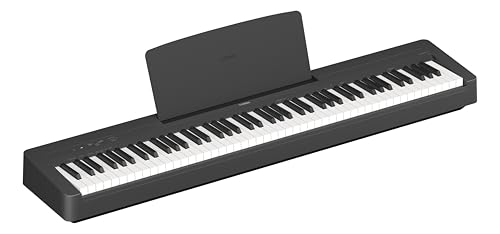
Yamaha 88-Key Bluetooth Digital Piano
Best for: Portable players needing Bluetooth audio streaming
- Connectivity
- Bluetooth (what this guide is about)
- Number of Keys
- 88
- Key Action
- Graded Hammer Compact
- Pedal Type
- Sustain foot switch
- Speaker System
- Built-in speakers
- Color
- Black
View on Amazon: Yamaha 88-Key Bluetooth Digital Piano Affiliate link
The Yamaha P145BT is an 88-key digital piano featuring Graded Hammer Compact weighted keys and built-in speakers. It supports Bluetooth audio for streaming music playback. This compact unit measures 52.2 inches wide and weighs 24.5 pounds. It suits players who want a portable instrument with app integration via Smart Pianist and Rec’n’Share.
Pros
- 88 weighted keys with Graded Hammer Compact action
- Bluetooth audio connectivity for streaming music
- Compact design at 24.5 pounds
- Includes sustain foot switch and music rest
Cons
- Bluetooth audio only, no MIDI connectivity listed
- Graded Hammer Compact action is less refined than full-size hammer actions
- No USB-MIDI port mentioned in specifications
Good fit if
- You need a lightweight piano for frequent travel
- You want to stream music through built-in speakers
- You prefer a compact footprint under 53 inches wide
Skip if
- You require USB-MIDI connectivity for computer recording
- You need a full-size Graded Hammer Action keyboard
- You want a weighted key action with higher resolution
Verdict: Yamaha P145BT 88-Key Bluetooth Digital Piano is a portable option for musicians who prioritize Bluetooth audio streaming and a lightweight build. It fits players who do not need USB-MIDI data transfer.
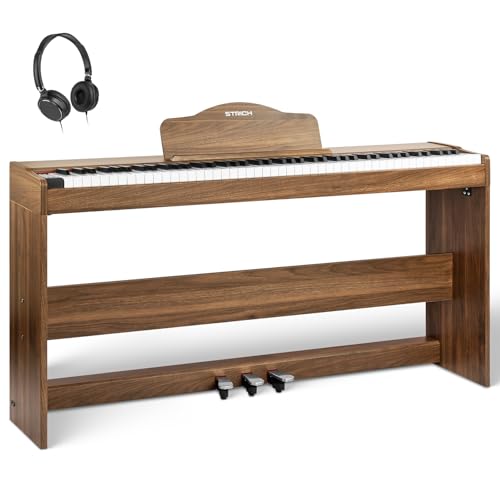
STRICH 88-Key Walnut Hammer Action Digital Piano
Best for: app users wanting furniture style
- Connectivity
- USB-MIDI, Wireless (what this guide is about)
- Number of Keys
- 88
- Key Action
- Fully weighted hammer action
- Preset Tones
- 128
- Speaker System
- 25W x 2
- Special Features
- Built-In Speakers
View on Amazon: STRICH 88-Key Walnut Hammer Action Digital Piano Affiliate link
The STRICH SDP-300W is an 88-key digital piano with fully weighted hammer-action keys. It supports USB-MIDI and wireless connectivity for app integration. The unit includes an audio-in port and 25W speakers. It features a walnut-wood-grain finish and furniture-style design. This model suits players who want traditional aesthetics and direct app connectivity without needing separate adapters.
Pros
- USB-MIDI and wireless connectivity
- Audio-in port for external audio
- 25W speaker system
- Fully weighted hammer-action keys
- Furniture-style walnut finish
Cons
- No built-in Bluetooth audio for music playback
- Requires external power adapter
- Heavier build at 58.8 pounds
Good fit if
- You want a furniture-style piano that looks like wood
- You need USB-MIDI and wireless connection for learning apps
- You want to play external audio through the piano speakers
Skip if
- You need built-in Bluetooth audio for streaming music
- You prefer a lightweight portable keyboard
- You want a modern minimalist design without wood grain
Verdict: STRICH SDP-300W 88-Key Digital Piano offers reliable USB-MIDI and wireless connectivity for app users who value a traditional furniture look. It fits players who want to integrate external audio sources and prefer a classic aesthetic over modern portability.

Zilvok 88-Key Semi-Weighted Digital Piano
Best for: beginners using app-based learning
- Connectivity
- USB-MIDI (what this guide is about)
- Number of Keys
- 88
- Key Action
- Semi-weighted
- Preset Tones
- 1000
- Pedal Type
- Sustain pedal
- Target Audience
- Beginners, Adults
View on Amazon: Zilvok 88-Key Semi-Weighted Digital Piano Affiliate link
This Zilvok digital piano features 88 semi-weighted keys designed for sensitive touch response. It includes USB-MIDI and dual-mode Bluetooth connectivity for linking to computers or mobile apps. The unit offers 1000 tones and 150 demo songs. It comes with a sustain pedal and headphone jack for private practice. This setup suits beginners who want a complete starter package with essential accessories.
Pros
- 88 semi-weighted keys for sensitive touch
- USB-MIDI and Bluetooth connectivity
- Includes sustain pedal and headphone jack
- 1000 preset tones and 150 demo songs
Cons
- Semi-weighted action lacks full hammer weight
- No dedicated display screen for settings
- No dedicated app mentioned for control
Good fit if
- You are a beginner seeking a complete starter kit
- You want to connect to a computer via USB-MIDI
- You prefer lighter key resistance for practice
Skip if
- You require fully weighted hammer-action keys
- You need advanced sound engine features
- You want a dedicated LCD display
Verdict: Zilvok 88-Key Semi-Weighted Digital Piano fits beginners who need a complete kit with USB-MIDI and Bluetooth connectivity for app-based learning. It is less suitable for players seeking the heavy resistance of fully weighted keys.

Donner OURA 88-Key Weighted Digital Piano
Best for: beginners wanting wireless connectivity
- Connectivity
- Bluetooth (what this guide is about)
- Number of Keys
- 88
- Key Action
- Graded Hammer
- Pedal Type
- Three Pedal
- Speaker System
- 2x10 W
- Target Audience
- Beginners
View on Amazon: Donner OURA 88-Key Weighted Digital Piano Affiliate link
The Donner OURA S100 is an 88-key digital piano with a graded hammer weighted keyboard and triple pedal. It features dual-mode Bluetooth for both MIDI and audio streaming. The unit includes 2x10 W speakers and weighs 46.5 pounds. This model suits beginners seeking wireless connectivity and a minimalist design for home use.
Pros
- Dual-mode Bluetooth for MIDI and audio
- Graded hammer weighted key action
- Triple pedal support
- 2x10 W speaker system
Cons
- 46.5 pounds is heavier than semi-weighted competitors
- Graded hammer action is less realistic than full hammer mechanisms
- No USB-MIDI port listed in specifications
Good fit if
- You want wireless MIDI and audio streaming
- You prefer a compact minimalist design
- You are a beginner starting with weighted keys
Skip if
- You need a full hammer-action mechanism
- You require a USB-MIDI connection
- You prefer a lighter portable keyboard
Verdict: Donner OURA S100 Digital Piano offers dual-mode Bluetooth and graded hammer keys for beginners. It fits users who value wireless connectivity and a space-saving design over professional-grade key actions.

STRICH 88-Key Hammer Action Digital Piano
Best for: home study with app integration
- Connectivity
- USB-MIDI, Wireless (what this guide is about)
- Number of Keys
- 88
- Key Action
- Hammer action fully weighted
- Preset Tones
- 900
- Speaker System
- 25W x 2
- Special Features
- Built-In Speakers
View on Amazon: STRICH 88-Key Hammer Action Digital Piano Affiliate link
This STRICH digital piano offers 88 fully weighted hammer-action keys with a simulated ivory texture. It supports both USB-MIDI and wireless connectivity for app integration. The unit includes 25W speakers and an audio-in port for external signal playback. It features 900 preset tones and 128 polyphony. The vintage brown furniture-style design fits home decor. It suits players seeking traditional connectivity and a classic aesthetic.
Pros
- Wireless and USB-MIDI connectivity options
- 25W built-in speaker system
- 88 fully weighted hammer-action keys
- Audio-in port for external playback
Cons
- No Bluetooth audio connectivity listed
- Requires AC power adapter
- Large furniture-style footprint
Good fit if
- You want wireless MIDI for app learning
- You prefer a vintage furniture look
- You need an audio-in input
Skip if
- You need Bluetooth audio streaming
- You require a compact portable design
- You want battery-powered operation
Verdict: STRICH SDP-300S 88-Key Digital Piano fits users who value wired and wireless MIDI connectivity alongside a traditional furniture aesthetic. It is a solid choice for home study where app integration and external audio input are priorities.
Specifications side by side
| Spec | Donner 88-Key Weighted Digital Piano | Yamaha 88-Key Bluetooth Digital Piano | STRICH 88-Key Walnut Hammer Action Digital Piano | Zilvok 88-Key Semi-Weighted Digital Piano | Donner OURA 88-Key Weighted Digital Piano | STRICH 88-Key Hammer Action Digital Piano |
|---|---|---|---|---|---|---|
| Number of Keys | 88 | 88 | 88 | 88 | 88 | 88 |
| Key Action | Heavy hammer action | Graded Hammer Compact | Fully weighted hammer action | Semi-weighted | Graded Hammer | Hammer action fully weighted |
| Sound Engine | French DREAM | not stated | not stated | not stated | not stated | not stated |
| Preset Tones | not stated | not stated | 128 | 1000 | not stated | 900 |
| Pedal Type | Triple pedal | Sustain foot switch | not stated | Sustain pedal | Three Pedal | not stated |
| Connectivity | USB-MIDI | Bluetooth audio | USB-MIDI, Wireless, Audio-in | Bluetooth, USB-MIDI | Dual-Mode Bluetooth (MIDI+AUDIO) | Wireless & USB-MIDI |
| Speaker System | 2x 25W | Built-in speakers | 25W x 2 | not stated | 2x10 W | 25W x 2 |
| Target Audience | Beginners | not stated | not stated | Beginners, Adults | Beginners | not stated |
| Color | Retro Wood | Black | Color Walnut Grain | Black | Modern Black | Vintage Brown |
| Special Features | not stated | Built-In Speakers | Built-In Speakers | not stated | not stated | Built-In Speakers |
| Dimensions | 53.9 × 17.9 × 29.3 inches | 10.6 × 52.2 × 5.08 inches | 12.4 × 51.2 × 27.4 inches | not stated | 50.8 × 14.9 × 35.7 inches | 12.4 × 51.2 × 29.2 inches |
| Weight | 52.5 pounds | 24.5 pounds | 58.8 pounds | not stated | 46.5 pounds | not stated |
| Size | Compact | not stated | Full | not stated | Full Size | Full Size |
| Model | DDP-80 | P145BT | SDP-300W | 801 | OURA S100 | SDP-300S |
Frequently asked questions
Can I use a digital piano with GarageBand without Bluetooth?
Yes, you can use GarageBand via a wired USB-MIDI connection. The Donner DDP-80 supports this method. It sends note data directly to your computer. This setup avoids battery concerns. It provides a stable link for recording. You do not need wireless features for basic app integration.
Which piano supports Bluetooth audio streaming for backing tracks?
The Yamaha P145BT supports Bluetooth audio streaming. It allows you to play music through its built-in speakers. This model lacks USB-MIDI data transfer. It fits players who prioritize listening to tracks. It is portable and lightweight. You get wireless audio without extra cables.
Do I need a cable to connect to learning apps?
You do not always need a cable. The STRICH SDP-300W offers both USB-MIDI and wireless connectivity. You can choose the method that suits your setup. Wireless MIDI removes cable clutter. USB-MIDI ensures a stable connection. Both options work for app-based learning.
Is Bluetooth MIDI the same as Bluetooth audio?
No, they serve different purposes. Bluetooth MIDI sends performance data to devices. It controls apps without latency. Bluetooth audio streams sound files. The Yamaha P145BT uses audio streaming. The Donner OURA S100 uses dual-mode Bluetooth. Check the specs to see which type you need.
Can I connect an external speaker to a Bluetooth piano?
Many models include built-in speakers for audio output. The Yamaha P145BT has built-in speakers. You can stream audio directly to them. The STRICH SDP-300S also features built-in speakers. This allows you to hear backing tracks wirelessly. You do not need external amps for basic practice.
Which model is best for a clutter-free desk setup?
The Donner OURA S100 is a strong choice. It offers dual-mode Bluetooth connectivity. This removes the need for USB cables. It also has a space-saving design. You get wireless control for apps. The compact build fits smaller workspaces. You avoid cable management issues.
Does the Zilvok piano support wireless app connection?
The Zilvok 801 supports USB-MIDI connectivity. It also includes Bluetooth for app-based learning. This combination offers flexibility. You can record via cable or control apps wirelessly. It fits beginners needing a complete kit. The semi-weighted keys suit light practice.
Can I use a furniture-style piano with wireless MIDI?
Yes, furniture-style pianos often include wireless MIDI. The STRICH SDP-300W has a walnut grain finish. It supports both USB-MIDI and wireless connections. You get a classic look with modern tech. It integrates external audio sources easily. This suits home study environments.