Form Factor in Digital Pianos: What It Is and Is It Worth It?
As an Amazon Associate we earn from qualifying purchases. Links on this page are affiliate links.
Form Factor Explained for Keyboards
The form factor describes the physical shape and intended use of a digital piano. This spec tells you how the instrument sits in your space and how you transport it. Manufacturers label listings with categories like upright, portable, stage, or folding. Each type serves a different purpose.
An upright form factor mimics the tall, vertical design of an acoustic piano. These units often include a built-in stand and pedals. They occupy more floor space but provide a traditional aesthetic. You typically place them against a wall. The height allows for a larger internal structure, which can influence the feel of the keys.
A portable form factor refers to lightweight, slab-style keyboards. These instruments lack a permanent stand. You must purchase a separate stand or use a desk. Portability is key here. You can easily lift the unit and move it to different rooms or locations. The weight is usually low, making it suitable for frequent travel.
A stage piano is similar to portable but focuses on performance. These models often feature more robust connectors for external equipment. They may include weighted keys for realistic playing feel. Stage pianos are designed to be plugged into amplifiers or PA systems. You will not find a built-in speaker system in most cases.
The folding form factor is a niche category. These pianos are designed to collapse for storage. They are ideal for users with limited space. You can fold the unit and store it in a closet. This spec is less common than the others.
Understanding form factor explained helps you choose the right instrument. Consider your available space and how often you move the piano. A heavy upright suits a dedicated music room. A portable or folding model fits small apartments. Check the dimensions listed in the specs. Measure your room before buying. This ensures the instrument fits your lifestyle.
Compare Digital Piano Form Factors
Upright
An upright digital piano mimics the vertical structure of an acoustic grand or upright. This design saves horizontal floor space by using height instead. You get a permanent furniture-style instrument that stays in one place. The Donner DDP-400 exemplifies this with a weighted action in a compact vertical chassis. It weighs 108 pounds and measures 15.8 inches deep. This form factor suits home studios with dedicated space. You sacrifice portability for a stable, traditional look. It is not designed for frequent transport. The vertical orientation requires a wall or stand for support. This option is best if you want a permanent setup without moving the instrument often.
Portable
A portable digital piano is a flat, lightweight slab designed for easy transport. It lacks a built-in stand or permanent housing. You place it on a separate X-stand or desk. The Yamaha P45 weighs only 25.4 pounds and measures 6 inches high. This makes it ideal for beginners needing weighted keys without bulk. You can pack it into a car trunk easily. The trade-off is the need for additional accessories like a stand and sustain pedal. It offers flexibility for players who move instruments frequently. You prioritize essential features and light weight over integrated aesthetics. This form factor fits small apartments or gigging musicians who need a reliable backup.
Stage Piano
A stage piano is built for performance and studio recording. It typically features a robust chassis and professional-grade key actions. The Nord Piano 6 includes a triple sensor keybed for precise response. It weighs 55.1 pounds and measures 59.8 inches long. This form factor prioritizes playability and onboard effects over built-in speakers. You connect it to external amplification or audio interfaces. It suits serious players who need durability and sound quality. The trade-off is the lack of integrated sound output. You must provide your own amplification for live use. This option is best for musicians who value key action and portability over all-in-one convenience.
Folding
A folding digital piano is designed for maximum compactness. It splits into sections that fold together for storage. The Homfan PH88C weighs just 15 pounds and folds to fit in a bag. This form factor offers the highest portability for travel. You sacrifice authentic acoustic resistance for a semi-weighted action. It suits beginners needing a portable practice tool. The trade-off is a less realistic key feel compared to weighted options. You prioritize space-saving and ease of transport over playing experience. This option is best for those with limited storage or who travel frequently. It is a practical solution for casual practice where weight and size are critical constraints.
Is This Form Factor Worth It
Who needs it
You need this spec if your living space is tight. An upright design saves floor area by using vertical height. It stays put and looks like furniture. If you want a permanent instrument that does not move, this fits. Portability matters if you gig often. You need a lightweight unit that fits in a car. Stage pianos strip away extra features to keep weight down. They connect to your amp or mixer easily. Folding pianos are unique for travelers. They collapse for storage or transport. You might need this if you have limited room for a full-size keyboard but still want a realistic feel. Check the dimensions carefully. Ensure it fits your desk or stand. Think about how often you move it. If it stays on a stand for years, portability is less critical. Prioritize the key action and sound engine for your daily practice needs.
Who can skip it
Skip this detailed comparison if you already know your space constraints. You can ignore the specific form factor labels if you prioritize sound quality above all else. A portable keyboard might lack the weight of an upright, but it offers flexibility. Focus on the number of keys and the touch sensitivity. These specs affect playability more than the outer shell. If you have a dedicated music room, any standard layout works. You do not need to worry about folding mechanisms or stage rigidity. Prioritize the internal components. Look at the polyphony count and speaker wattage. These determine how the instrument performs during complex passages. The physical shape is secondary to the electronic capabilities. Choose based on connectivity options and included accessories. Your setup needs will dictate the best choice, not the marketing category.
Key Form Factor Terms
Key Action
This spec describes how the keys respond to your touch. It includes weight, resistance, and the mechanism used. You want a feel that mimics acoustic piano hammers for realistic playing.
Number of Keys
This is the total count of playable keys on the board. Most digital pianos have 88 keys, matching a standard acoustic piano. Fewer keys, like 61, are common in portable or stage models.
Form Factor
This term defines the physical shape and intended placement of the instrument. Common types include upright, portable, stage, and folding. It determines how much floor space you need and how you transport it.
Target Audience
This spec identifies who the instrument is designed for. Categories include beginners, students, professionals, or touring musicians. It helps you match features to your skill level and performance needs.
Pedal Type
This describes the sustain or expression pedal included. Types include half-damper, on/off, or expression. Some units include one pedal, while others offer two or three for nuanced control.
Included Accessories
This lists items provided in the box, such as a stand, bench, or power adapter. Checking this helps you calculate the total setup cost and ensure you have necessary support gear.
Connectivity
This covers input and output ports for audio and data. Look for USB, MIDI, headphone jacks, or Bluetooth. These connections allow you to link the piano to computers, speakers, or apps.
Color
This is the cosmetic finish of the piano body. Options typically include black, white, or wood grain. While it does not affect sound, it helps the instrument match your home decor style.
Quick picks
| # | Product | Best for | Price |
|---|---|---|---|
| 1 | Donner 88-Key Upright Digital Piano | home studios needing weighted upright action | Check price of Donner 88-Key Upright Digital Piano on Amazon |
| 2 | Yamaha 88-Key Weighted Portable Digital Piano | beginners needing portable weighted keys | Check price of Yamaha 88-Key Weighted Portable Digital Piano on Amazon |
| 3 | Nord Piano 6 88-Key Stage Piano | Live performance and studio recording setups | Check price of Nord Piano 6 88-Key Stage Piano on Amazon |
| 4 | Homfan 88-Key Foldable Digital Piano | Beginners needing portable practice tools | Check price of Homfan 88-Key Foldable Digital Piano on Amazon |
| 5 | Yamaha Arius 88-Key Upright Digital Piano | Home practice and traditional upright aesthetics | Check price of Yamaha Arius 88-Key Upright Digital Piano on Amazon |
| 6 | Roland RD 88-Key Stage Piano | Gigging musicians needing portable stage performance | Check price of Roland RD 88-Key Stage Piano on Amazon |
Our 6 picks

Donner 88-Key Upright Digital Piano
Best for: home studios needing weighted upright action
- Form Factor
- Upright (what this guide is about)
- Number of Keys
- 88
- Key Action
- harmmer progressive weighted
- Sound Engine
- French Dream
- Preset Tones
- 138 tones
- Connectivity
- IOS, Android, USB MIDI
View on Amazon: Donner 88-Key Upright Digital Piano Affiliate link
This upright digital piano features 88 hammer progressive weighted keys with a double-contact design. It uses a French Dream sound engine with dual 15-watt amplifiers for a fuller sound. The cabinet measures 54.53 by 35.04 by 15.75 inches. It includes USB MIDI connectivity for iOS and Android devices. This model suits players seeking a traditional upright footprint with weighted action.
Pros
- 88 hammer progressive weighted keys with double-contact design
- Dual 15-watt amplifiers for richer resonance
- French Dream sound source with 138 tones
- Upright form factor saves floor space
Cons
- Heavier build at 109 pounds
- No Bluetooth connectivity listed
- Limited polyphony at 128 voices
Good fit if
- You need a traditional upright shape
- You want weighted keys for practice
- You have space for a 54-inch unit
Skip if
- You require Bluetooth connectivity
- You need a portable keyboard
- You want a lighter instrument
Verdict: Donner DDP-400 Upright Digital Piano fits beginners who want a weighted upright piano without the bulk of an acoustic instrument. It is a solid choice for home studios with dedicated space.

Yamaha 88-Key Weighted Portable Digital Piano
Best for: beginners needing portable weighted keys
- Form Factor
- Portable (what this guide is about)
- Number of Keys
- 88
- Key Action
- Weighted
- Preset Tones
- 10
- Pedal Type
- Sustain foot switch
- Connectivity
- USB
View on Amazon: Yamaha 88-Key Weighted Portable Digital Piano Affiliate link
The Yamaha P45 is an 88-key portable digital piano with a weighted action. It weighs 25.4 pounds and measures 52.3 inches long. The unit includes 10 preset tones and built-in speakers. A sustain foot switch is included for expression. Its compact form factor makes it easy to move. This model suits beginners who need a standard keyboard feel in a portable design.
Pros
- 88 weighted keys for acoustic piano feel
- Lightweight at 25.4 pounds
- Includes sustain foot switch
- Built-in speakers for immediate use
Cons
- Only 10 preset tones available
- No Bluetooth connectivity listed
- No display screen for settings
Good fit if
- You need a lightweight keyboard for travel
- You want a standard 88-key weighted action
- You are a beginner starting with basics
Skip if
- You require extensive sound customization
- You need wireless Bluetooth connectivity
- You want a built-in display screen
Verdict: The Yamaha P45 Portable Digital Piano offers a reliable weighted key action in a lightweight package. It fits beginners who prioritize portability and essential features over advanced sound options.
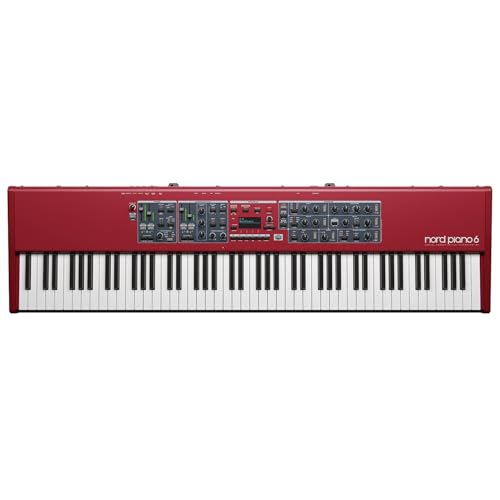
Nord Piano 6 88-Key Stage Piano
Best for: Live performance and studio recording setups
- Form Factor
- Stage Piano (what this guide is about)
- Number of Keys
- 88
- Key Action
- Triple Sensor Keybed
- Pedal Type
- Triple pedal
- Color
- Red
- Dimensions
- 13.7 × 50.5 × 4.76 inches
View on Amazon: Nord Piano 6 88-Key Stage Piano Affiliate link
The Nord Piano 6 is an 88-key stage piano with a triple sensor keybed. It measures 59.8 inches long and weighs 55.1 pounds. The unit includes a triple pedal and onboard effects. Its compact stage design suits musicians who need portability without sacrificing key count. It is built for live performance and studio use rather than home furniture placement.
Pros
- 88-key triple sensor keybed for precise response
- Includes triple pedal for full expression
- Onboard effects for sound shaping
- Compact stage form factor at 19.7 inches wide
Cons
- Heavy at 55.1 pounds for frequent transport
- No built-in speakers for standalone play
- Limited to stage piano functionality without external amp
Good fit if
- You need a reliable 88-key action for live gigs
- You require triple pedal support for classical pieces
- You want onboard effects without extra gear
Skip if
- You prefer a lightweight portable keyboard under 20 pounds
- You need built-in speakers for home practice
- You are looking for a furniture-style upright piano
Verdict: The Nord Piano 6 88-Key Stage Piano delivers a triple sensor keybed and onboard effects for serious players. It fits musicians who prioritize key action and portability over built-in speakers.

Homfan 88-Key Foldable Digital Piano
Best for: Beginners needing portable practice tools
- Form Factor
- Folding (what this guide is about)
- Number of Keys
- 88
- Key Action
- Semi-weighted
- Pedal Type
- Sustain pedal
- Connectivity
- Bluetooth, USB-MIDI
- Target Audience
- Beginners
View on Amazon: Homfan 88-Key Foldable Digital Piano Affiliate link
The Homfan PH88C is a foldable digital piano with 88 semi-weighted keys. It weighs 15 pounds and measures 38.6 inches long. You get Bluetooth and USB-MIDI connectivity for apps. The design collapses for storage. It includes a sustain pedal and music rest. This model suits beginners who need portability and basic learning tools without the bulk of a full upright.
Pros
- 88 semi-weighted keys for balanced touch
- Foldable design for compact storage
- Bluetooth and USB-MIDI connectivity
- Includes sustain pedal and music rest
Cons
- Semi-weighted action lacks full hammer weight
- No dedicated display screen for settings
- No built-in speakers mentioned in data
Good fit if
- You need a portable keyboard for small spaces
- You want to connect to learning apps
- You are a beginner on a budget
Skip if
- You require authentic weighted hammer action
- You need high-fidelity built-in speakers
- You play in professional performance settings
Verdict: Homfan 88-Key Semi-Weighted Foldable Piano offers a compact solution for beginners who prioritize portability and app integration over authentic acoustic resistance.

Yamaha Arius 88-Key Upright Digital Piano
Best for: Home practice and traditional upright aesthetics
- Form Factor
- Upright (what this guide is about)
- Number of Keys
- 88
- Key Action
- Graded Hammer Standard
- Sound Engine
- CFX Concert Grand Piano Voice
- Preset Tones
- 10
- Pedal Type
- 3-pedal unit
View on Amazon: Yamaha Arius 88-Key Upright Digital Piano Affiliate link
The Yamaha Arius Series is a traditional upright digital piano with 88 weighted keys. It features a Graded Hammer Standard keyboard and includes a triple pedal unit. The design mimics acoustic piano aesthetics with wood grain finishes. It offers CFX Concert Grand Piano sound with resonance effects. This unit includes a bench and stereo speakers, making it a complete home instrument.
Pros
- 88-key Graded Hammer Standard weighted action
- Traditional upright form factor with wood grain design
- Includes triple pedal unit and bench
- Dual headphone jacks for solo or duo play
Cons
- Heavy at 83.8 pounds, limiting portability
- No Bluetooth connectivity listed in specifications
- Fixed upright design prevents compact storage
Good fit if
- You want a traditional upright piano look
- You need a dedicated home practice instrument
- You prefer a fixed, stable keyboard stand
Skip if
- You need to move the piano frequently
- You require Bluetooth audio or app control
- You have limited floor space for an upright
Verdict: The Yamaha Arius Upright Digital Piano suits players seeking a permanent, furniture-style instrument with realistic weighted keys and a classic aesthetic. It is ideal for home use where portability is not a priority.

Roland RD 88-Key Stage Piano
Best for: Gigging musicians needing portable stage performance
- Form Factor
- Stage Piano (what this guide is about)
- Number of Keys
- 88
- Key Action
- Weighted-action PHA-4
- Sound Engine
- SuperNATURAL, ZEN-Core
- Preset Tones
- Over 3000
- Speaker System
- Stereo
View on Amazon: Roland RD 88-Key Stage Piano Affiliate link
The Roland RD-08 is a stage piano designed for portability and professional use. It features an 88-note PHA-4 weighted-action keyboard with Ivory Feel keys. The instrument uses SuperNATURAL and ZEN-Core sound engines to provide over 3000 preset tones. Weighing 39.5 pounds, it includes an onboard stereo speaker system. This compact unit suits musicians who need reliable performance and expandable sounds for live settings.
Pros
- 88-note PHA-4 weighted-action keyboard with Ivory Feel
- SuperNATURAL and ZEN-Core sound engines
- Onboard stereo speaker system
- Over 3000 preset tones
Cons
- No Bluetooth connectivity listed
- No dedicated display screen mentioned
- No remote control included
Good fit if
- You need a portable stage piano for gigging
- You want a weighted keyboard with Ivory Feel keys
- You require onboard speakers for practice
Skip if
- You prefer an upright piano form factor
- You need a folding keyboard for storage
- You want a beginner semi-weighted action
Verdict: The Roland RD-08 88-Key Stage Piano offers professional-grade playability and sound in a lightweight chassis. It fits gigging musicians who value portability and immediate access to high-quality tones without external amplification.
Specifications side by side
| Spec | Donner 88-Key Upright Digital Piano | Yamaha 88-Key Weighted Portable Digital Piano | Nord Piano 6 88-Key Stage Piano | Homfan 88-Key Foldable Digital Piano | Yamaha Arius 88-Key Upright Digital Piano | Roland RD 88-Key Stage Piano |
|---|---|---|---|---|---|---|
| Number of Keys | 88 | 88 | 88 | 88 | 88 | 88 |
| Key Action | harmmer progressive weighted | Weighted | Triple Sensor Keybed | Semi-weighted | Graded Hammer Standard | Weighted-action PHA-4 |
| Form Factor | Upright | Portable | Stage piano | not stated | Upright | Stage piano |
| Sound Engine | French Dream | not stated | not stated | not stated | CFX Concert Grand Piano Voice | SuperNATURAL, ZEN-Core |
| Preset Tones | 138 tones | 10 | not stated | not stated | 10 | Over 3000 |
| Pedal Type | not stated | Sustain foot switch | Triple pedal | Sustain pedal | 3-pedal unit | not stated |
| Connectivity | IOS, Android, USB MIDI | USB | not stated | Bluetooth, USB-MIDI | Dual headphone jacks | not stated |
| Speaker System | dual 15w amplifiers | not stated | not stated | not stated | Built-in stereo amplifier and speakers | Stereo |
| Target Audience | Beginners | not stated | not stated | Beginners | not stated | not stated |
| Color | Black | Black | Red | 88 key PH88C Standard | Black | Black |
| Special Features | not stated | Built-In Speakers | not stated | not stated | not stated | not stated |
| Dimensions | 15.8 × 35 × 15.8 inches | 52.3 × 11.5 × 6 inches | 13.7 × 50.5 × 4.76 inches | 38.6 × 9.06 × 15 inches | 4.2 × 6.1 × 5.4 inches | 54.5 × 16 × 12 inches |
| Weight | 108 pounds | 25.4 pounds | 55.1 pounds | 15 pounds | 83.8 pounds | 39.5 pounds |
| Size | 54.53 x 35.04 x 15.75 inches | 52.25 inches (L) x 11.5 inches (W) x 6 inches (H) | not stated | 88Key | 88-Key | 12.00 |
| Model | DDP-400 | P45B | NORDPIANO688 | 2lX-zo2JfcEsrZn-IJ4pzzltPcHUu | YDP145B | RD-88 |
Frequently asked questions
What is the difference between a portable and a stage piano?
Portable pianos like the Yamaha P45 include built-in speakers and often a stand, making them ready for home use. Stage pianos, such as the Nord Piano 6, lack built-in speakers to save weight. They prioritize key action and connectivity for live performance or studio setups where you use external amplification.
How much space does an upright digital piano take?
An upright digital piano uses vertical height to save floor space. The Donner DDP-400 measures 15.8 inches deep and 35 inches wide. It weighs 108 pounds, so it is not meant to be moved often. You should place it in a dedicated spot in your home studio.
Can a folding piano provide a realistic playing experience?
Folding pianos like the Homfan PH88C offer portability but often use semi-weighted keys. They weigh only 15 pounds and fold for easy transport. They are best for beginners who need a compact practice tool rather than those seeking the heavy resistance of a traditional acoustic or weighted digital instrument.
Which form factor is best for gigging musicians?
Stage pianos are designed for gigging musicians. The Roland RD-08 weighs 39.5 pounds and has a slim profile. It lacks built-in speakers, allowing you to connect to professional sound systems. This form factor prioritizes quick access to tones and durable key action for live performance environments.
Do upright digital pianos come with pedals?
Some upright models include multiple pedals for realistic play. The Yamaha Arius YDP-145 features a triple pedal system. This setup mimics the sustain, soft, and sostenuto pedals found on acoustic pianos. It is ideal for players who want a traditional home practice instrument with full functionality.
Is a stage piano heavy to carry?
Stage pianos are lighter than uprights but still require effort to move. The Nord Piano 6 weighs 55.1 pounds. The Yamaha P45 portable model is much lighter at 25.4 pounds. You should check the weight spec if you plan to transport the instrument frequently for gigs or lessons.
What key action do portable pianos usually have?
Portable pianos often feature weighted key actions to simulate acoustic resistance. The Yamaha P45 offers a reliable weighted feel in a lightweight package. This helps beginners develop proper finger strength. It balances portability with a playing experience that is closer to a traditional piano than unweighted keys.